Custom OEM Metal Pens Manufacturer & Global Supplier
Custom OEM Metal Pens Manufacturer & Global Supplier
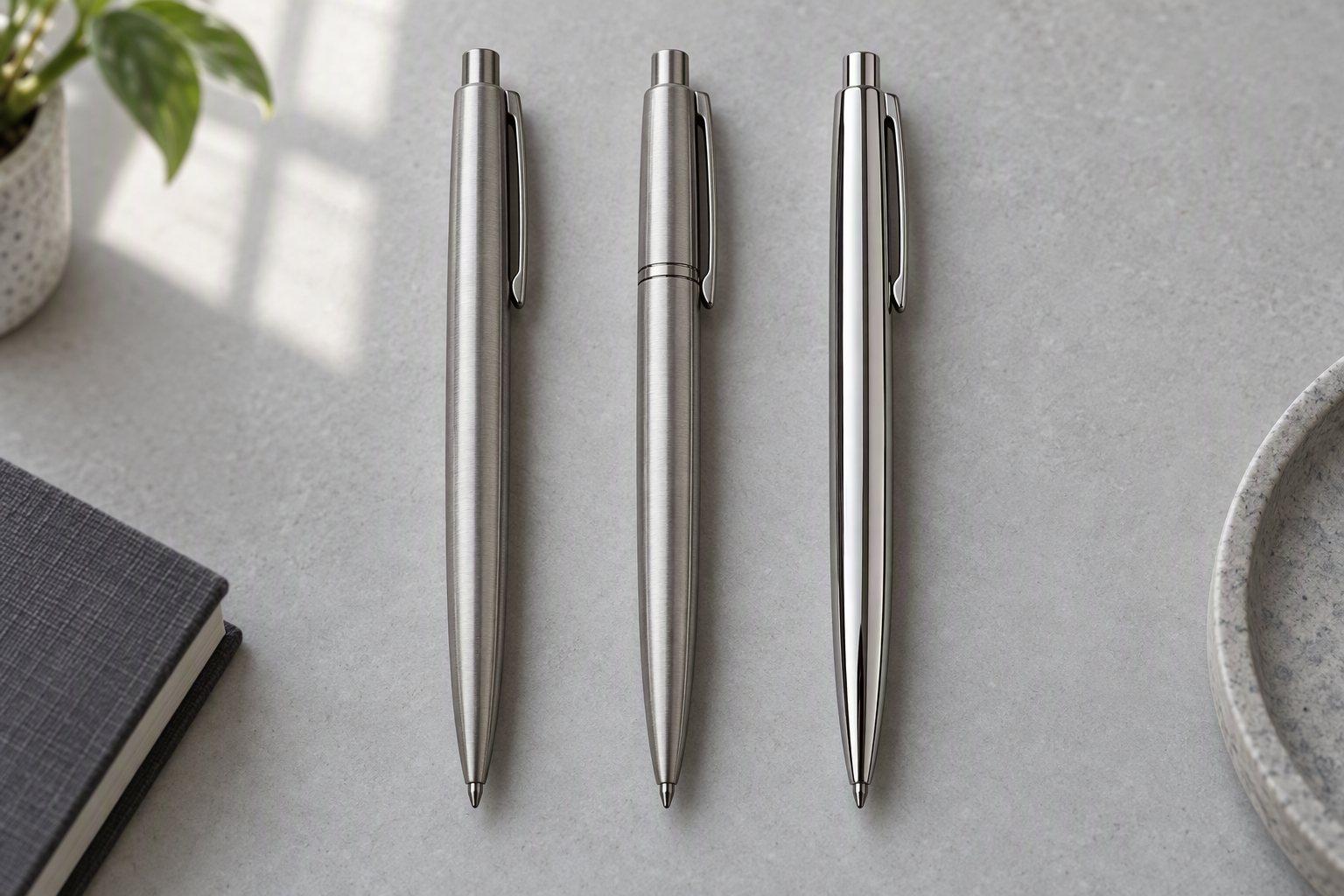
“Sample” is one of the loosest words in the custom-pen trade. When a supplier offers to send one, they could mean a pen pulled from stock, a barrel with your logo applied, or a unit built on the real tooling the week before the production run. In an email the three look like the same promise. In what they actually prove, they have almost nothing in common.
Confusing them is how buyers end up approving the wrong thing. Approve a logo sample as though it were a production sample and you have signed off a look, a colour and a finish that the real run may not deliver — because the sample was never made the way the run will be made. The clock then starts, and by the time the difference appears, it appears on thousands of pens.
This article separates the three sample types dimension by dimension — who makes each one, how long it takes, whether it is charged, what it proves and, more importantly, what it does not prove. It then gives a simple decision rule for which one to ask for at each stage of your project.
About the figures in this article. The lead times, charging practices and freight arrangements described below are typical of the custom-pen trade as a whole — they are not our published price list, and not a promise of any specific term. Rates and timelines vary by supplier, product and market. Use the comparison to know what to expect and what to ask, then confirm everything in writing before you commit money.
Nine dimensions, three columns. The two rows that matter most are the fourth and fifth — what each sample proves and what it does not — because those are the two most often read backwards by buyers in a hurry.
| Dimension | Stock sample | Logo sample | Pre-production sample |
|---|---|---|---|
| Who makes it | Built earlier for the catalogue — often carries another customer’s logo, or none | Built to your spec, usually by hand or on a soft tool | Built on the real tooling, with the real line settings, just before the run |
| Typical lead time | Days if it is in stock; one to two weeks otherwise | One to two weeks after artwork is confirmed | Around two to three weeks once tooling is ready |
| Is it charged? | Sometimes free when drawn from existing stock; freight is usually on the buyer | Usually charged; some suppliers credit the fee against a first order | Usually charged; on larger programmes it is sometimes waived |
| What it proves | The product exists, matches the catalogue, and meets a baseline build quality | Your decoration is achievable on this barrel — position, legibility, contrast | What the mass-production run will actually look like, made under run conditions |
| What it does NOT prove | Anything about your logo, your chosen finish, or batch consistency | Batch consistency — colour, plating thickness and stamping depth on a real run can differ | Nothing further. This is the approval point |
| Represents mass production? | No — it is a catalogue unit | No — it is a one-off, usually hand-finished | Yes — it is made the way the run will be made |
| Typical quantity | One to three pieces | One or two pieces | One or two pieces, occasionally a small pilot run |
| Who pays freight | Usually the buyer, both directions | Usually the buyer, both directions | Usually the buyer, both directions |
| Returnable? | Usually not, unless it is defective | Usually not, unless it is defective | Usually not — keep it as your inspection reference |
Read down the “represents mass production” row and the article has almost written itself. Only the pre-production sample earns a yes. Everything before it is preparation — useful, necessary preparation, but preparation nonetheless.
The stock sample exists so you can judge the product before you design around it — weight, balance, how the mechanism feels in the hand, whether the barrel diameter suits the end user. It is also the cheapest way to shortlist suppliers: stock samples from two or three factories tell you more about build quality than any presentation deck — a deck is written, a pen is built.
What it cannot do is say anything about your logo, your chosen finish, or how consistently your own batch will be built. It is a catalogue unit carrying someone else’s decoration, or none at all. Judge the pen on the sample; judge the supplier on how it arrived and what came with it. The wider vetting process is covered in our guide to vetting a metal pen manufacturer.
The logo sample answers one question: does your artwork survive contact with this barrel? Position, legibility at size, contrast against the finish, whether fine lines hold up under the chosen decoration method. It exists to catch artwork problems before tooling money is spent, and it does that job well.
What it does not do is predict the run. A logo sample is typically hand-finished or made on a soft tool, and the next section explains why that distinction is expensive to get wrong. Before requesting one, put the artwork through a pre-flight check: the position, minimum size and colour count decisions you make now are the ones the decoration method has to live with. Our artwork checklist covers what to verify — catching a problem now costs a file edit; catching it after tooling costs a tool.
The pre-production sample is built on the real tooling, with the real line settings, just before production. Its colour comes from the real plating bath or the real spray line, its depth from the real press. It is the closest thing to a unit from the finished batch that exists before the finished batch exists.
This is the sample your approval should anchor to — and the approval of this sample is what starts the 30–45 day production clock. Not the artwork approval, not the logo sample approval. The pre-production sample approval. How sampling, MOQ and the lead-time window fit together is covered in our guide to MOQ, sampling and lead times; the stage-by-stage build that produces the sample is described in how a metal pen is made, step by step.
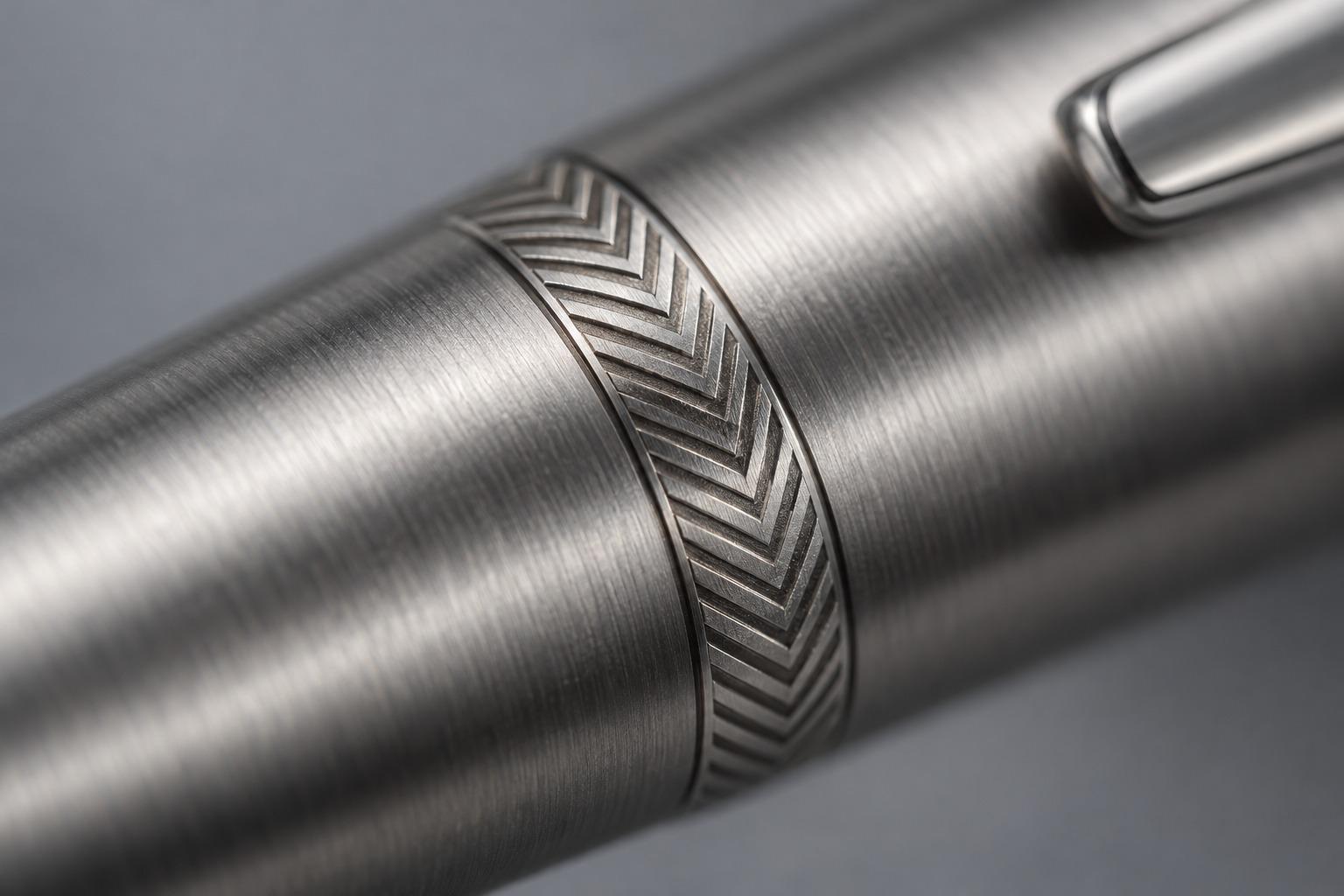
This is the most expensive misunderstanding in the trade, so it gets its own section. A logo sample is often made by hand, or on a soft tool — a temporary mould that exists to prove a shape and take a decoration, not to run production. Mass production runs on the real mould, with the real line settings: plating tank time, curing temperature, stamping pressure, all dialled to the values that produce the run’s units.
The result is that colour, plating thickness and stamping depth can all differ between the hand-made sample and the machine-run batch. Not because anyone made a mistake — because the two objects were never made the same way. A logo sample that says “your logo is achievable on this barrel” is telling the truth. A logo sample that says “every pen in your order will look like this” is making a promise that nobody hand-finishing a single unit can keep.
Now connect that to the schedule. The quoted lead time is 30–45 days, and the clock starts at sample approval. If the sample you approved was a logo sample, you have moved your approval point weeks earlier than it should sit — before tooling, before line settings, before anything that determines what the run will look like. The run then proceeds to a spec you never saw in representative form. If it comes back different — and it can — the pens exist, the clock has run, and your contract is anchored to a sample that was never representative. That is the worst position in this trade, reached entirely through a vocabulary mistake.
Approving a pre-production sample
- The unit was made the way the run will be made
- Colour, plating thickness and depth come from real line settings
- Your approval is anchored to a representative unit
- Any discrepancy in the run has something specific to be compared against
Approving a logo sample as the final sample
- The unit was hand-finished or made on a soft tool
- The run’s colour, plating thickness and stamping depth can differ
- Your approval is anchored to a one-off nobody will repeat
- A later complaint compares the run against a sample that was never representative
There is a commercial reason to wait for the real sample as well. The tooling fee is non-refundable and the tooling itself remains the factory’s property — that money buys the real mould, and the real mould is what makes the real sample possible. The pre-production sample is not an extra step bolted onto your order; it is the moment the tooling you paid for first produces something you can judge. Asking for it is not delaying your schedule; skipping it just moves the risk to a date when finding it costs more.
The decision table below covers the situations buyers actually find themselves in. The pattern is simple: stock samples to choose, a logo sample to prove the artwork, and a pre-production sample before money leaves your account for the run.
| If this is your situation | Ask for |
|---|---|
| You are comparing suppliers for the first time | A stock sample — judge build, weight and mechanism, then shortlist |
| You need to check your logo looks right on this barrel | A logo sample, after the artwork has passed a pre-flight check |
| You are about to release payment for a production run | A pre-production sample, always — no exceptions worth taking |
| You need to verify the gift box and how it packs | A packed sample — a logo sample plus the real packaging, so the box assembly is judged too. Packaging options are worth confirming at this stage |
| You need to check writing quality and refill behaviour | A stock sample fitted with your chosen refill — the barrel rarely determines the writing experience alone |
| You are choosing between two finishes | Stock samples in both finishes — or one pen each, side by side on your desk |
| This is a first order with a supplier you have not used before | All three, in sequence — stock, then logo, then pre-production. It is the cheapest time you will ever have to be thorough |
The last row deserves emphasis: a first order with a supplier you have not used before should go through all three stages in sequence — not because any single one is insufficient, but because each answers a different question, and a small first order is the cheapest place you will ever have to ask all three. Decide the refill before you order any of them: the refill type determines the writing experience more than the barrel does, and it is far cheaper to fit the right one into a sample than to swap it across a finished batch.
Sample logistics are usually simple, and the usual arrangement in this trade is worth knowing before the question comes up. The buyer typically pays courier freight in both directions, even where the sample itself is free — the factory is covering the unit, not the shipping. Some suppliers credit a sample fee against the first order; that is worth asking for, and it is a reasonable request rather than a favour.
On rejection, the reasonable expectation is this. If a sample fails against the brief — wrong colour, wrong position, illegible logo, wrong mechanism — a competent supplier remakes it rather than argues about it, because a sample that misses the brief has not done its job. If a sample “fails” because the artwork itself was wrong — a font that does not engrave cleanly at that size, a detail too fine for the method — that is the sample succeeding, and the fix is a file edit, which may be chargeable depending on how far the supplier carried it. Both outcomes are the system working. The expensive outcome is a sample approved too early, which is the trap the next box warns about.
The “approval sample” trap. If a supplier offers only a logo sample and calls it your approval sample, they are moving your approval point earlier than it should be — weeks before the real run is set up, and before the real tooling produces a representative unit. That shifts risk onto you: your sign-off gets anchored to a hand-finished one-off, and the production run will not match it exactly. The fix is one direct question, asked before anything is signed: “Is this sample made on the production tooling, or by hand?” The answer should be a single sentence. If it is a paragraph, keep asking.
Keep the approved pre-production sample. Do not send it back and do not lose it — it is the reference you will compare the incoming shipment against. Production inspection runs under ISO 2859-1 at general inspection level II, single sampling at normal severity, with AQL 2.5 for major defects and 4.0 for minor; zero acceptance on critical defects is a contractual position we hold, not a property of the standard itself. The scheme is explained in our AQL and inspection article. An approved sample sitting on your desk is what makes an inspection report mean something.
Sometimes, and sometimes not — it depends on the type. Stock samples drawn from existing inventory are the most likely to be free, with freight on the buyer. Logo samples and pre-production samples are more often charged, because each one consumes tooling access, line time or decoration setup, and some suppliers credit that fee against a first order. The reliable practice is to get the charge, if any, stated in writing before the sample is made, along with whether it is creditable. A supplier who is vague about this is vague about it for a reason.
No — and this is the single most expensive mistake in the sampling sequence. The logo sample proves the artwork is achievable on the barrel; it does not represent the run, because it is typically hand-finished or made on a soft tool. Your approval should anchor to the pre-production sample, which is made on the real tooling with the real line settings. Approving earlier moves the risk of every difference onto you, and the production clock starts at the approval you actually give.
It sits after tooling, so it inherits tooling time first. As a typical industry pattern, expect around two to three weeks once the tooling is ready — and note that this time sits before the 30–45 day production window, not inside it. The sample is not a delay to your schedule; it is the last cheap opportunity to change one. Never accept a pre-production sample date so close to the production start that a rejection has nowhere to go.
In most cases, no. Samples are yours to keep — the freight is the supplier’s cost of getting your decision, and a supplier who demands samples back is usually protecting against a competitor seeing their unit. Keep the approved pre-production sample specifically: it is your reference when the shipment arrives, and comparing a delivered batch against a labelled sample is a five-minute check that catches problems paperwork alone can miss.
That is the sample doing its job, and it should feel like a save rather than a setback. A rejection found before the run means the problem is caught when changes are still cheap — before material, before line time, before the full quantity. Expect a remake, and expect the production clock to start at the approval of the corrected sample rather than the first one. A supplier who treats a pre-production rejection as an annoyance rather than a checkpoint is telling you how they will treat the run.
Tell us where you are in the process — comparing suppliers, checking artwork, or about to release a production run — and we will send the right sample type for that stage and say plainly what it will and will not prove.
