Custom OEM Metal Pens Manufacturer & Global Supplier
Custom OEM Metal Pens Manufacturer & Global Supplier
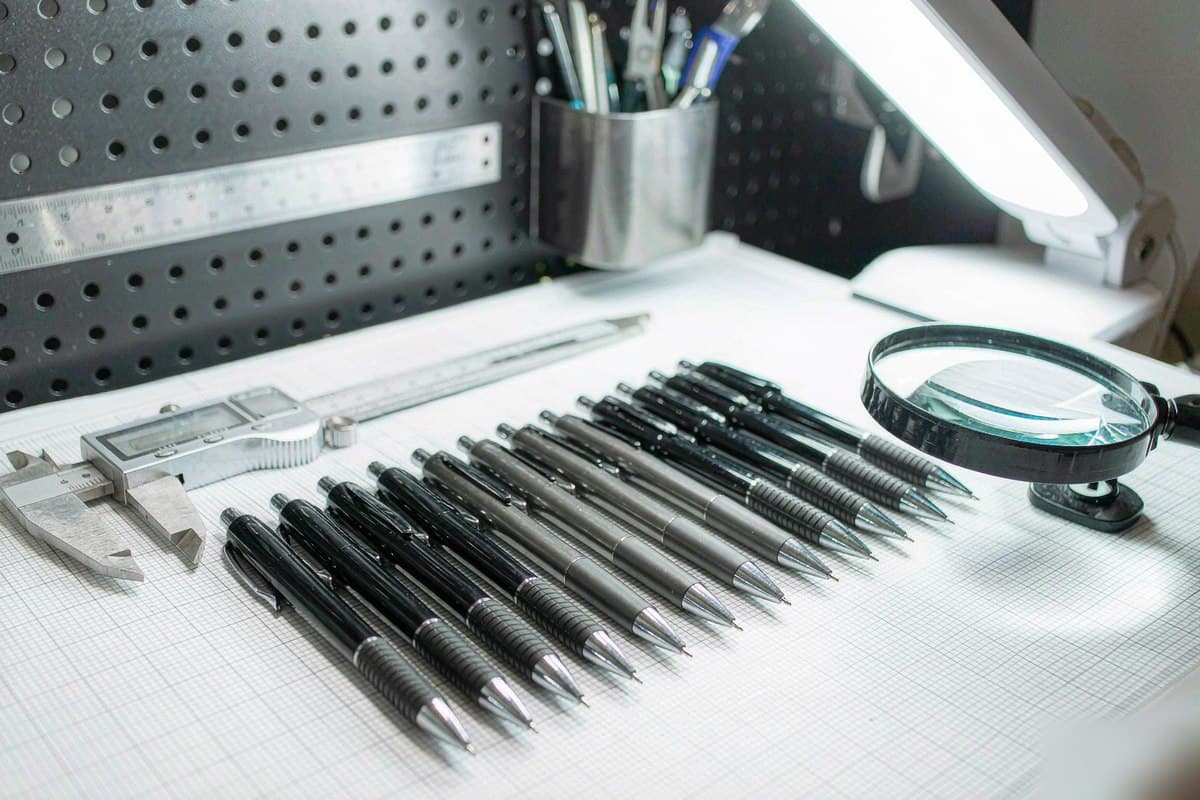
Most buyers only ever see two moments of an order: the sample approval email, and the delivery note. Everything in between — the machining, plating, engraving and inspection that decide whether your logo still looks sharp after six months in a customer’s pocket — happens inside the factory, largely unseen.
Since 2014, Karry Industrial has been manufacturing metal ballpoint and rollerball pens for promotional distributors, corporate gifting companies and stationery brands across Europe, North America and the Middle East. The factory behind them, in Nanchang, has been turning and finishing pens since 1997. This article walks through each stage of the process, so you know exactly what you are paying for, where the risks sit, and which decisions need to be made early rather than late.
Every pen starts as a material decision, and that decision influences weight, finish and unit price more than anything else downstream.
Getting this choice right early avoids the most common disappointment in the trade: a pen that looks outstanding in photographs but feels wrong in the hand. For a detailed head-to-head comparison, see Brass, Aluminum, or Stainless Steel? Choosing the Right Material for Custom Metal Pens.
Barrels are cut from solid rod or tube on CNC lathes, then threaded, bored and shaped for their clip and mechanism. We do this in-house, which means programme adjustments are made at the machine rather than negotiated with an outside workshop — and that is usually what separates a two-week sampling cycle from a five-week one.
Tolerance matters more than it sounds:
Sub-millimetre errors rarely show up in product photography. They show up twelve months later as returns, complaints, and a buyer quietly moving to another supplier.
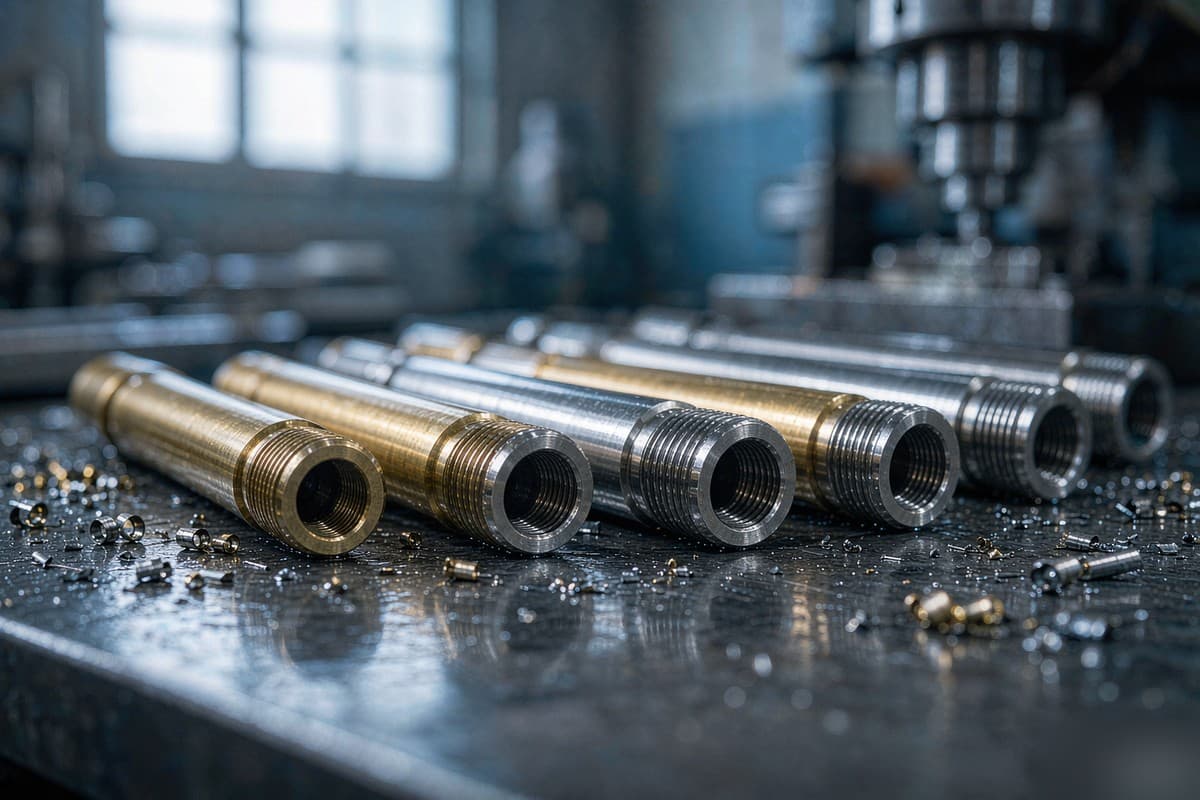
A machined barrel is bright, raw and easily scratched. Finishing gives it colour, protection and the tactile quality customers judge within two seconds of picking it up.
Consistency is the genuinely hard part. A repeat order placed twelve months after the first should look identical to it, not approximately similar. We retain finish references for every mould so reorders are matched against the original rather than re-invented.
Branding is applied after finishing, so the mark sits on the final surface rather than being worked over later.
The two methods used most often are laser engraving (permanent, tone-on-tone, no colour) and screen printing (spot colours that can be matched to Pantone references). Many buyers combine both: an engraved barrel logo for permanence, plus a printed gift box for colour impact. We have written a full comparison here: Laser Engraving vs. Screen Printing.
Artwork is confirmed on a pre-production sample before the full run begins. Vector files deliver the cleanest result, and a single-colour logo keeps both unit cost and lead time down.
Assembly is where a pen either writes well or does not write at all. Refills are fitted, mechanisms are cycled, and every batch is writing-tested before it is released to packing. Buyers can specify:
What gets checked at this stage:
Quality control runs at three points in every order: incoming material inspection, in-process checks during machining and finishing, and final inspection of the completed batch. Our QC department handles all three in-house, which is also why our materials are 100% REACH and RoHS compliant — a requirement many European retailers and customs brokers will ask you for. For the full inspection and testing standard, see Quality Control & Compliance.
Packing should follow the way the pen is handed over, not the other way round:
Tell us the end use and we will quote the packing that suits it, rather than the most expensive one.
| Stage | What happens | What you need to decide |
|---|---|---|
| Enquiry & quotation | Specification review, unit pricing, packing options | Material, finish, logo method, quantity |
| Artwork & pre-production sample | A physical sample made to your specification | Approve the sample in hand — or request revisions |
| Tooling | Only required for fully bespoke shapes | Adapt an existing mould, or invest in a new one |
| Mass production | Machining, finishing, branding, assembly | Confirm shipping schedule and export documents |
| QC & packing | Final inspection, packing, carton marking | Retail-ready or bulk-packed |
| Shipment | Sea or air freight, documentation coordinated | Incoterms and destination port |
Lead time is driven mainly by three things: whether a new mould is needed, how many finishing steps the design requires, and how much hand-work the packing involves. We quote a firm schedule with every quotation rather than a hopeful one.
For a breakdown of what each of those stages costs, and why two quotations for the same drawing can differ so much, see Custom Metal Pen Pricing: What Really Drives Your Unit Cost.
Custom branding typically starts at 1,000 pieces. For mixed programmes and first-time sampling we can be more flexible — send us your requirement and we will tell you honestly whether there is a better structure for it.
Yes, and we recommend it. You receive a pre-production sample with your actual logo on the actual finish, so you are approving a real object rather than a rendering. Nothing goes into full production before that sample is signed off. Stock samples ship free within 48 hours — see Request Samples.
Yes. All Karry pen materials are 100% REACH and RoHS compliant, and compliance documentation can be provided with your shipment for customs or retailer review.
For printed artwork, yes — close matching is straightforward. On metal itself, plating and anodising produce a colour that shifts with light because the surface is reflective, so we match by reference swatch rather than by Pantone number. Bringing us a physical reference always gives the best result.
Every step described above exists for one reason: the pen carries your brand, not ours. Understanding the process makes supplier conversations shorter and quotations much easier to compare.
Send us your artwork for a quotation within one working day
Browse the full metal pen range, or send a drawing, an artwork file, or just a description of what you need. We will come back with unit pricing at quantity breaks and a firm lead time.
Request a free quote Request free samples Browse the metal pen range
