
Custom OEM Metal Pens Manufacturer & Global Supplier
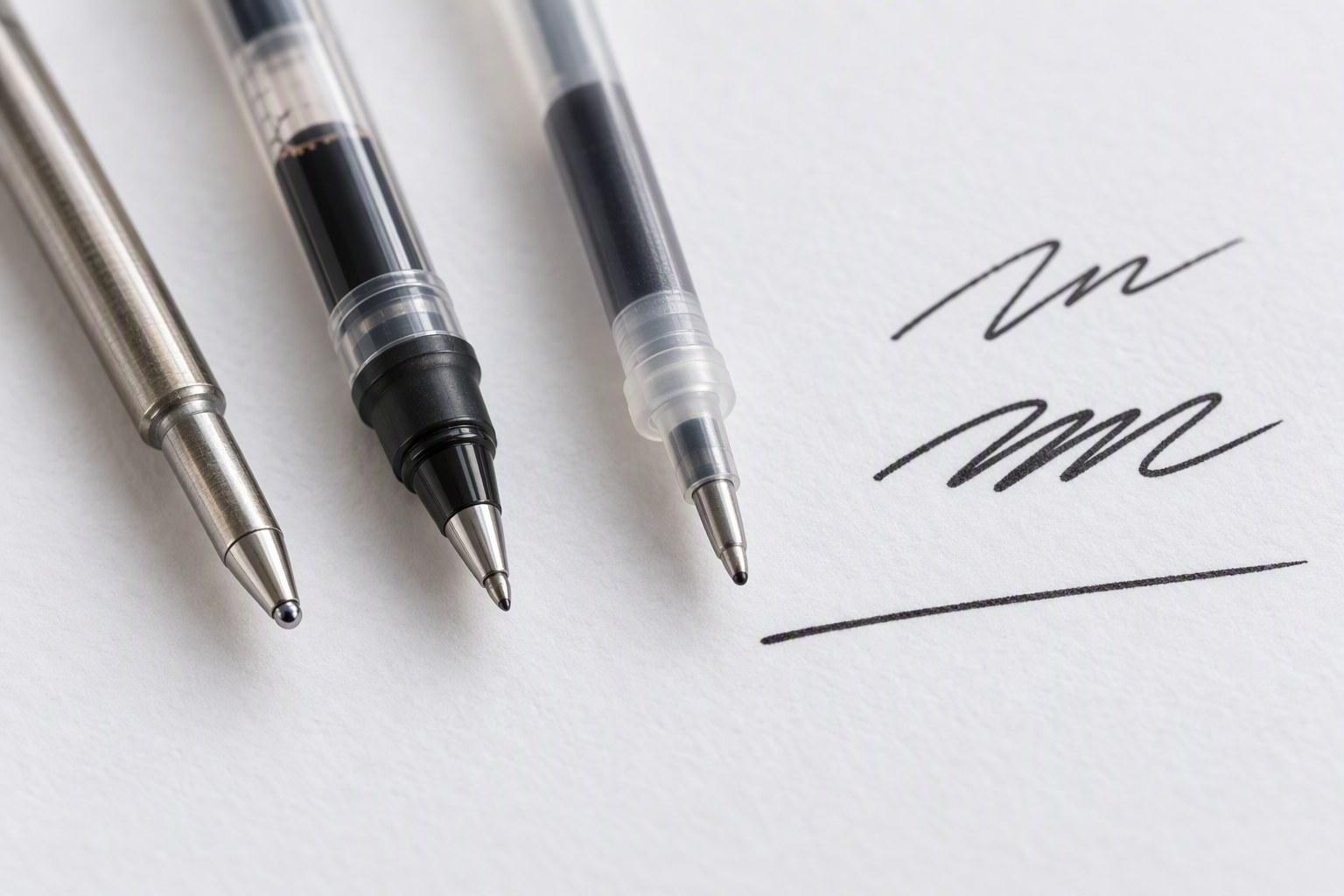
You have chosen the barrel, the finish and the engraving. Then someone asks the question that decides whether the pen is actually pleasant to use: what ink goes inside it?
It matters more than most buyers expect. The refill determines how the pen writes, how quickly the ink dries, whether it smudges on the documents your client signs, and — critically — whether the pen can be refilled in two years or becomes a beautiful piece of metal with nothing to write with.
There are three ink types in common use. Here is how they differ, and which one fits which kind of programme.
| Ballpoint (oil-based) | Rollerball (water-based) | Gel | |
|---|---|---|---|
| Ink base | Thick oil-based paste | Liquid water-based ink | Gel emulsion, pigment suspended |
| Writing feel | Firm, slight drag, needs pressure | Wet, smooth, almost no pressure | Smooth with more resistance than rollerball |
| Line quality | Consistent, thinner lines | Rich, expressive, thicker lines | Crisp, high contrast, strong colour |
| Drying time | Immediate | 2–5 seconds — can smudge | 1–3 seconds |
| Smudge risk | Very low | Highest, especially on glossy paper | Low to moderate |
| Ink capacity | Highest — often 2–4× rollerball | Lowest | Low |
| Shelf life | Very long, years unused | Shorter — dries out if left uncapped | Long if capped |
| Refill cost | Lowest | Middle | Highest |
| Pressure required | High — harder for some users | Very low | Low |
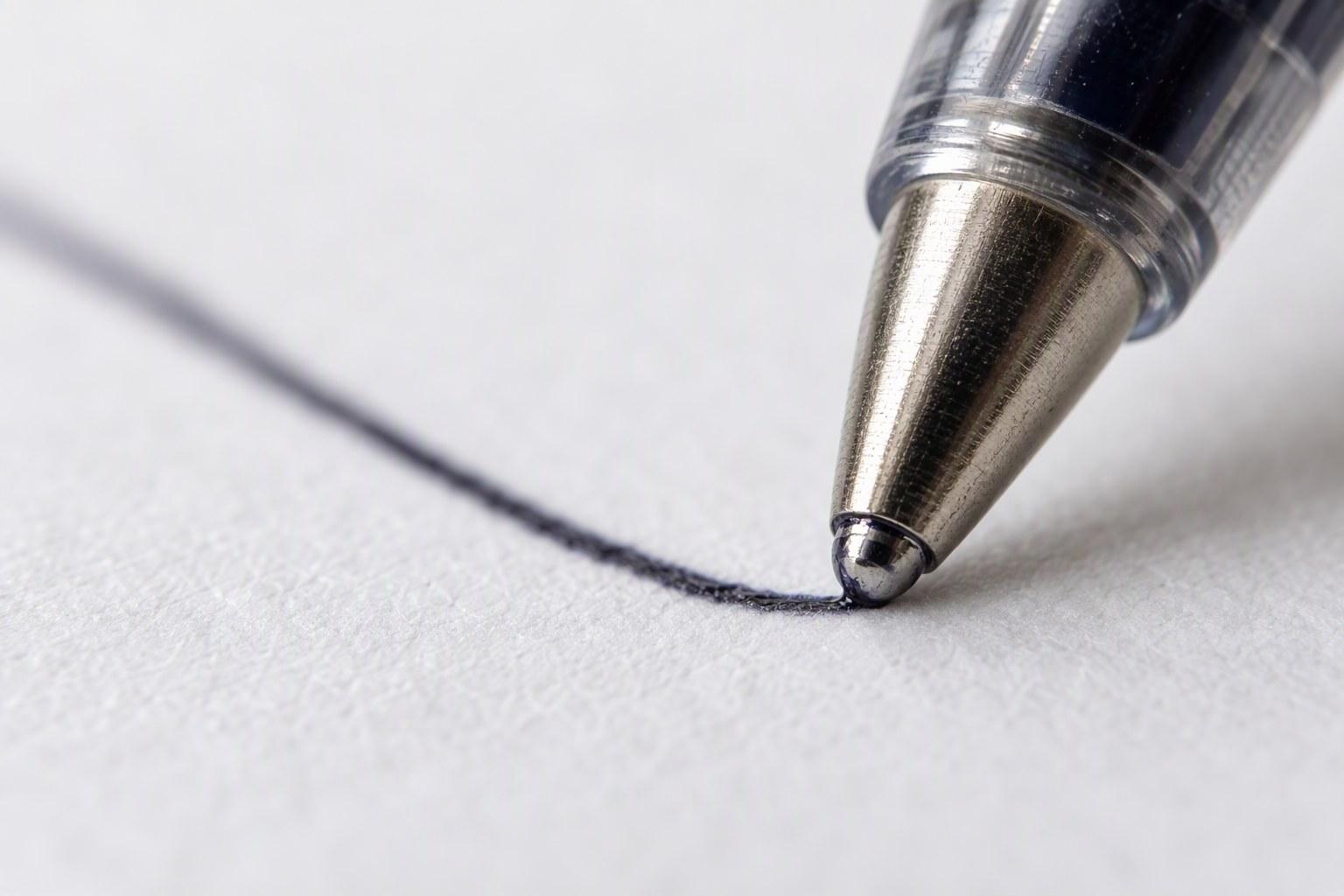
Oil-based ballpoint ink is thick, which is why a ballpoint lasts so much longer than the alternatives and why it writes immediately without smudging. It is also why it needs a little pressure to lay down a line — some people find that tiring over long writing sessions.
For corporate gifting, the practical advantages are hard to argue with. A ballpoint refill can sit in a drawer for two years and still write on the first stroke. It does not dry out if the pen is left uncapped. It does not smudge on the glossy paper used for certificates and formal documents. And it is the cheapest of the three to replace.
If your pen is going to be used intermittently — picked up a few times a week rather than daily — ballpoint is almost always the right choice. It is the default refill in most of our metal pens for exactly this reason.
Water-based rollerball ink flows. There is almost no pressure required, the line is rich and dark, and the writing experience is closer to a fountain pen than anything else in the retractable category. This is what people mean when they describe a pen as “nice to write with”.
The trade-offs are real, though. Ink capacity is the lowest of the three, so a rollerball runs out sooner. The ink takes a few seconds to dry, which means a left-handed writer or a quick signature on a glossy page can smudge. And an uncapped rollerball will dry out — if you leave it sitting for a month without the cap on, it may not recover.
Watch the paper. Rollerball ink behaves beautifully on uncoated paper and problematically on coated stock. If your pens will be used to sign certificates, glossy contracts or laminated forms, test a rollerball on that exact paper before you order 5,000 of them. This is the single most common complaint we receive about rollerball refills, and it is entirely preventable.
Rollerball suits pens given to people who write for a living — lawyers, designers, executives who take handwritten notes — and it is the natural pairing for a heavier brass or stainless barrel where the weight does part of the work.
Gel ink is a pigment suspension. It produces the highest-contrast, most saturated line of the three, which is why gel pens have become the default choice for signatures that need to reproduce well when scanned or photocopied.
It sits between the other two on most dimensions: smoother than ballpoint, drier than rollerball, more expensive than either. The line is crisp and dark, and on a signed document it reads as deliberate.
Gel refills have one quirk worth knowing — the ink can be more sensitive to temperature extremes than oil-based ballpoint ink, and a gel pen left in a hot car may write unevenly until it settles. For normal office and gifting use this is not a practical concern, but for pens that will travel in vehicles or sit in unheated storage it is worth noting.
| Use case | Recommended ink | Why |
|---|---|---|
| Contract / certificate signing | Ballpoint or gel | Immediate drying; gel gives the strongest scanned line |
| Executive note-taking | Rollerball | The writing experience is the point |
| Trade show giveaway | Ballpoint | Cheapest refill, survives months in a drawer |
| Hotel or reception desk | Ballpoint | Irregular use; must write first time, every time |
| Left-handed recipients | Ballpoint | No smudge window |
| Premium client gift | Rollerball or gel | Reads as a considered, high-quality object |
| Forms and carbon copies | Ballpoint | Pressure transfers through to lower copies |
Here is the detail that matters more than any of the above, and the one most buyers never ask about.
A pen is only refillable if its refill is a standard size. If the manufacturer uses a proprietary cartridge, the pen becomes unusable the moment that cartridge runs dry — no matter how good the barrel is. You have bought a disposable object with a metal shell.
Three standards cover the overwhelming majority of refillable metal pens:
| Standard | Also known as | Typical use | Availability |
|---|---|---|---|
| Parker-style G2 | Parker G2, ISO 12757-2 | Most retractable metal ballpoints and gel pens | Universal — stocked by every stationery supplier |
| D1 | Mini refill, Cross-style | Slim and compact pens | Widely available, less choice of ink |
| Rollerball standard | Rollerball cartridge | Rollerball pens | Common, but less standardised than G2 |
Parker-style G2 is the one to aim for. It is used across an enormous range of pens, made by dozens of manufacturers, and available in ballpoint, gel and low-viscosity variants — so the recipient can choose their own ink later without replacing the pen. Our refill range covers both Parker and D1 patterns: Metal Parker Pen Refill RF06, D1 Cross Pen Refill RF03, and the Metal Roller Pen Refill RF04 for rollerball barrels.
The question to ask any supplier: “Which refill standard does this pen take, and can I buy that refill from a third party?” A supplier who answers “Parker G2” is giving you a pen with a long life. A supplier who answers with a model number is giving you a pen that belongs to them. This is also the foundation of the sustainability claim — a pen is only genuinely reusable if refills stay available.
Refills are cheap and light, which makes them an easy thing to overlook — and a costly thing to run out of. When a pen is refillable but the recipient cannot find a replacement, the pen still ends up in a drawer.
Our recommendation is straightforward: order refills as a percentage of the pen order. Ten to fifteen percent of the pen quantity, delivered in the same shipment, covers the first replacement cycle and costs very little. It also gives you a legitimate reason to contact the client again when you follow up about reordering.
If you are combining pens and refills in one order, mention it when you request the quote — refills pack into the same carton and add almost nothing to freight. See how the order stages work if you are planning your first run.
Ballpoint, by a wide margin — oil-based ink is consumed far more slowly than water-based or gel ink, and a ballpoint refill can often write several times as many pages as a rollerball of the same size.
Usually yes, if the pen takes a Parker-style G2 refill — that standard is available in ballpoint, gel and low-viscosity variants, so the recipient can switch. If the pen uses a proprietary cartridge, no.
Different, not better. Gel produces a darker, higher-contrast line that scans well, which suits signatures. Ballpoint lasts longer, never smudges and works after long storage, which suits everyday promotional use.
Water-based ink takes a few seconds to dry, and coated or glossy paper slows absorption further. If smudging is a problem in your use case, switch to ballpoint or gel rather than changing the pen.
Around 10–15% of the pen quantity is a practical starting point. It covers the first replacement cycle for the pens most likely to be used regularly, and refills add very little to shipping cost.
Signing contracts, taking notes, sitting on a hotel desk or going into a show bag — each points to a different refill. Send us the use case and the quantity, and we will recommend the ink type and the refill standard, and quote pens and refills together.
