
Custom OEM Metal Pens Manufacturer & Global Supplier
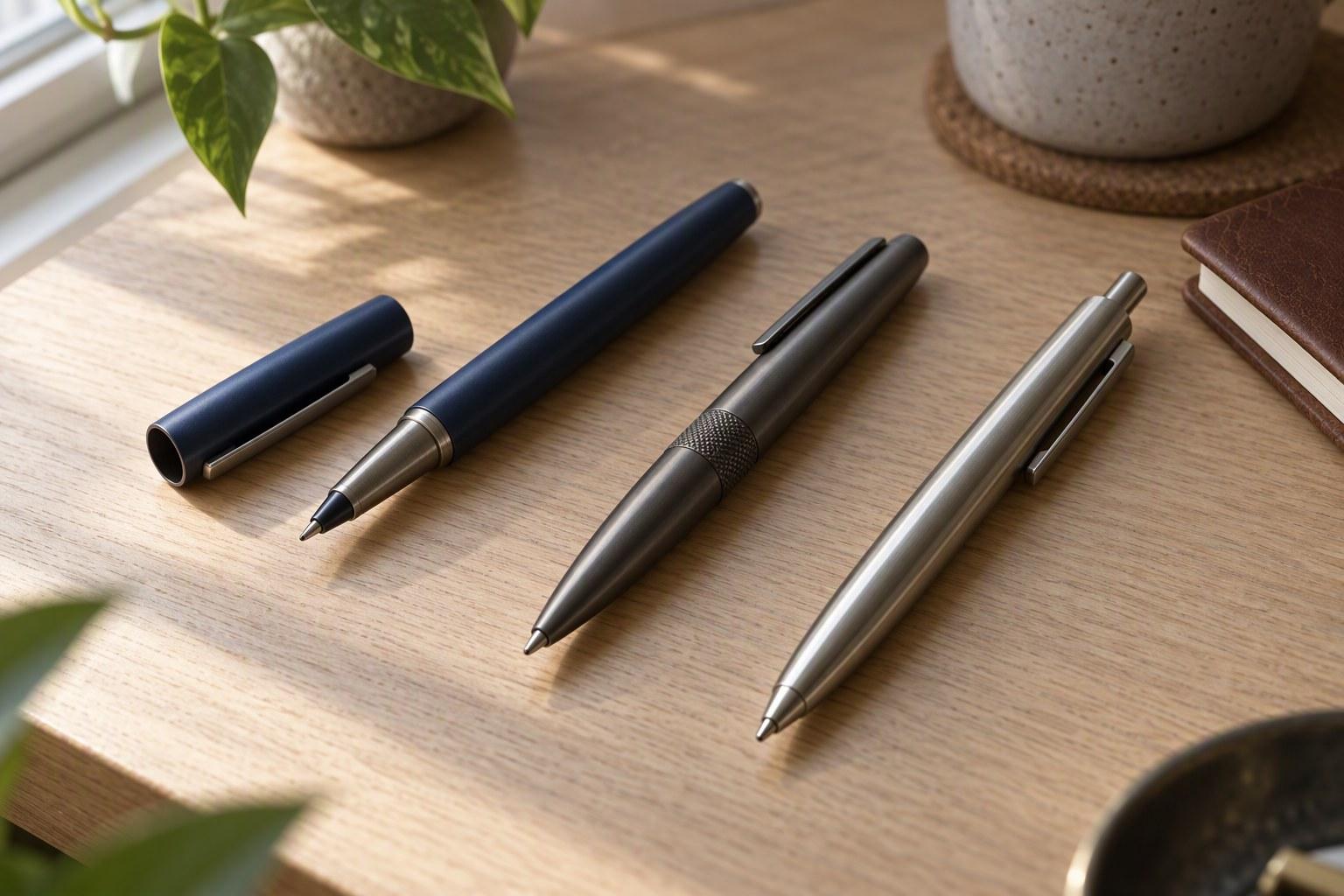
Most pen enquiries arrive with the material, colour and logo already decided, and one blank space where the mechanism should be. It is the specification nobody thinks about until the sample arrives and the pen does not feel the way they imagined.
The mechanism — cap-off, twist or click — is the part the recipient touches every single time they use the pen. It determines how the object feels in the hand, how long it survives, whether the cap gets lost, and in some cases where your logo is allowed to go. It is worth ten minutes of thought before you commit to 5,000 units.
Here is how the three options actually differ, and which one suits which kind of order.
| Cap-off | Twist | Click | |
|---|---|---|---|
| How it works | Removable cap protects the tip | Barrel rotates to extend the refill | Spring-loaded button at the top |
| Parts count | Lowest — cap plus barrel | Highest — cam, spring, inner barrel | Medium — spring, plunger, button |
| Feel | Traditional, deliberate, “signing a contract” | Smooth, quiet, premium | Immediate, familiar, functional |
| One-handed use | No | Yes | Yes |
| Failure mode | Cap lost; tip dries out | Mechanism jams if grit enters | Spring weakens; rattle develops |
| Logo real estate | Barrel and cap — two surfaces | Barrel and clip | Barrel and button top |
| Relative unit cost | Lowest | Highest | Middle |
| Best for | Formal gifting, signature moments | Executive gifting, rollerballs | Everyday promotional use |
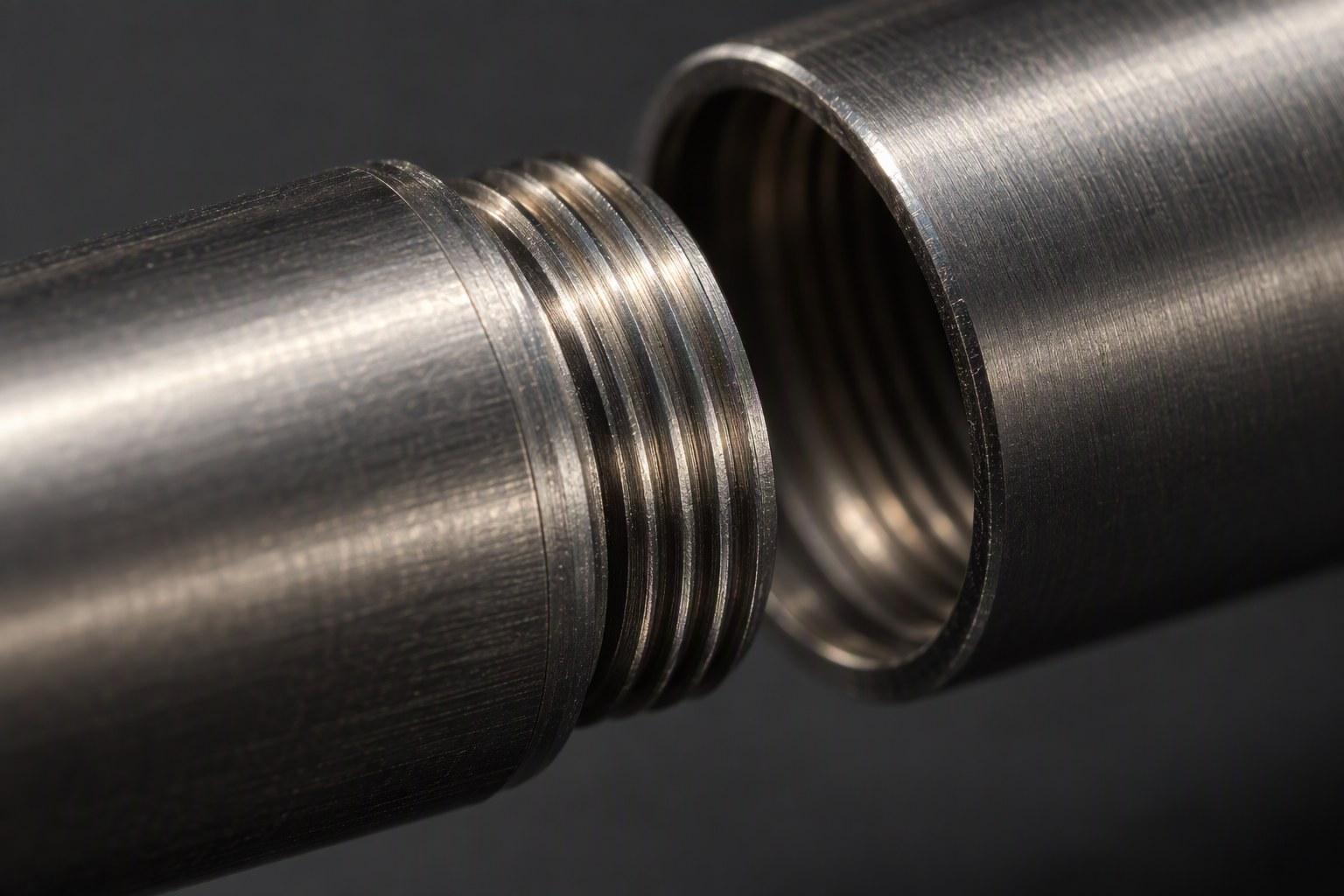
The oldest and simplest design. A separate cap covers the writing tip; you pull it off to write and push it back on afterwards. Most fountain pens and a large share of premium ballpoints and rollerballs use this arrangement.
Its advantage is ceremony. There is a reason contract signings and diplomatic photographs feature cap-off pens: the act of removing a cap signals that something deliberate is happening. If your pens are given at a moment of decision — a deal closing, a long-service award, a framed certificate — a cap-off pen fits the occasion better than the alternatives.
It also gives you a second branding surface. The cap can carry a logo, a tagline, or a secondary mark, while the barrel carries the primary one. On a two-surface design like this you can fit considerably more brand information than on a twist or click pen, which matters if you have a long company name or a regulatory line to include.
The cap-off risk is the cap. Caps get separated from pens and lost. Once the cap is gone the pen is unprotected and, on many models, looks obviously incomplete. This is a real problem for giveaway pens handed to strangers, and much less of a problem for a pen that lives in an office. If your order is a mass giveaway, think carefully before choosing cap-off.
See a typical example: Brass Parker Cap-Off Ballpoint Pen KR2042, or the Cap-Off Gel Pen KR2027 for a lighter gel-ink option.
A twist pen extends the refill when you rotate the two halves of the barrel relative to each other. No cap to lose, no button to press, and no noise — which is why it dominates the executive gifting segment.
The mechanics are the most complex of the three: a cam mechanism, a spring, and an inner barrel that has to move smoothly inside the outer one for years. That complexity is why twist pens usually cost more, and also why manufacturing tolerance matters so much. A well-made twist feels precise and silent. A badly made one grinds, wobbles, or needs two hands.
How to judge a twist mechanism in a sample: turn it slowly through a full cycle. It should feel consistent all the way round with no tight spot and no rattle when you shake the closed pen gently. Then turn it twenty times in a row — if the feel changes, the tolerance is marginal and it will get worse at volume.
Twist pens are typically the best match for rollerball and premium ballpoint designs, and they photograph well, which matters if your recipients post about the gift. Examples: Brass Corporate Rollerball KR5002 and the Brass Gold Heavy Weight Vintage Ballpoint KR5004.
A spring-loaded button at the top of the barrel extends and retracts the refill. One-handed, immediate, and instantly familiar to anyone who has used a retractable pen — which is nearly everyone.
Click mechanisms are the right answer when the pen’s job is to be used constantly rather than admired. They are also the most forgiving on cost, sitting between cap-off and twist, and they tolerate the kind of handling that ruins a cap-off pen within a week.
Two things to watch. First, the button is a noise source — a cheap click is loud enough to be annoying in a quiet meeting room, and recipients notice. Second, the button is another branding surface: a small logo or initial on the button top is a detail that makes a pen feel considered rather than generic.
| Gifting occasion | Recommended | Reasoning |
|---|---|---|
| Contract signing / deal completion | Cap-off | The cap removal is part of the moment |
| Executive / board gifting | Twist | Silent, weighty, feels expensive |
| Trade show giveaway | Click | Cheap to lose, works one-handed while walking |
| Staff onboarding kit | Click or twist | Used daily; cap-off caps will be lost |
| Long-service award | Cap-off or twist | Ceremonial, and likely to be kept and displayed |
| Client thank-you at year end | Twist | Reads as a considered gift, not merchandise |
| Conference delegate bag | Click | Volume matters; the pen travels in a bag |
| Hotel / restaurant in-room pen | Click or twist | Cap-off caps disappear from rooms immediately |
The most expensive error we see is not choosing the wrong mechanism — it is choosing the mechanism after the artwork has been approved.
Different mechanisms expose different surfaces, and the printable area changes with them. A logo sized for a cap-off barrel may not fit the narrower inner barrel of a twist pen, and a design that works on a cap face may have nowhere to go on a click pen. When the artwork is finalised first, the mechanism choice often has to be forced to fit the logo rather than the other way round — and the result is a pen that looks like a compromise.
Do these two things in this order: pick the mechanism first, then lay out the artwork against that mechanism’s actual printable area. Our artwork checklist gives the minimum sizes and clear-space rules for each surface. If you are still deciding on the branding method itself, the method comparison covers which processes suit which mechanism.
As a rough guide, holding material and finish constant:
The differences are meaningful but rarely decisive on their own — usually a small fraction of the unit price. Do not let a few cents per pen push you into a mechanism that is wrong for the occasion. Our cost driver guide shows how mechanism cost compares with material and branding cost.
If you are ordering at the sample stage anyway, ask for one of each mechanism in the same material and finish. Comparing them side by side tells you more than any specification table.
Cap-off, mechanically — there is almost nothing to wear out. Twist and click both have moving parts that degrade, though a well-machined twist will comfortably outlast the pen’s useful life. In practice, cap-off pens fail by losing their cap rather than by breaking.
Yes, and it is one of the main reasons to choose cap-off — it gives you a second branding surface. Note that cap and barrel are often printed or engraved in separate operations, so a two-surface design carries a slightly higher setup cost.
Considerably. A twist makes almost no sound; a click is audible and cheap click mechanisms can be loud enough to be distracting in a meeting. If your recipients work in quiet environments, this is worth weighing.
Not directly — most metal pens in all three mechanisms accept a standard Parker-style G2 refill. The mechanism governs how the refill is extended, not which refill fits. See the refill standard explained.
Twist, in our experience, followed closely by click. Cap-off is a smaller share but dominant in formal, ceremonial and contract-signing contexts where the act of removing the cap is part of the point.
Tell us the occasion, the audience and roughly how many units. We will recommend two or three options across the three mechanisms and send samples in the same material and finish so you can compare them in your hand rather than on a screen.
