
Custom OEM Metal Pens Manufacturer & Global Supplier
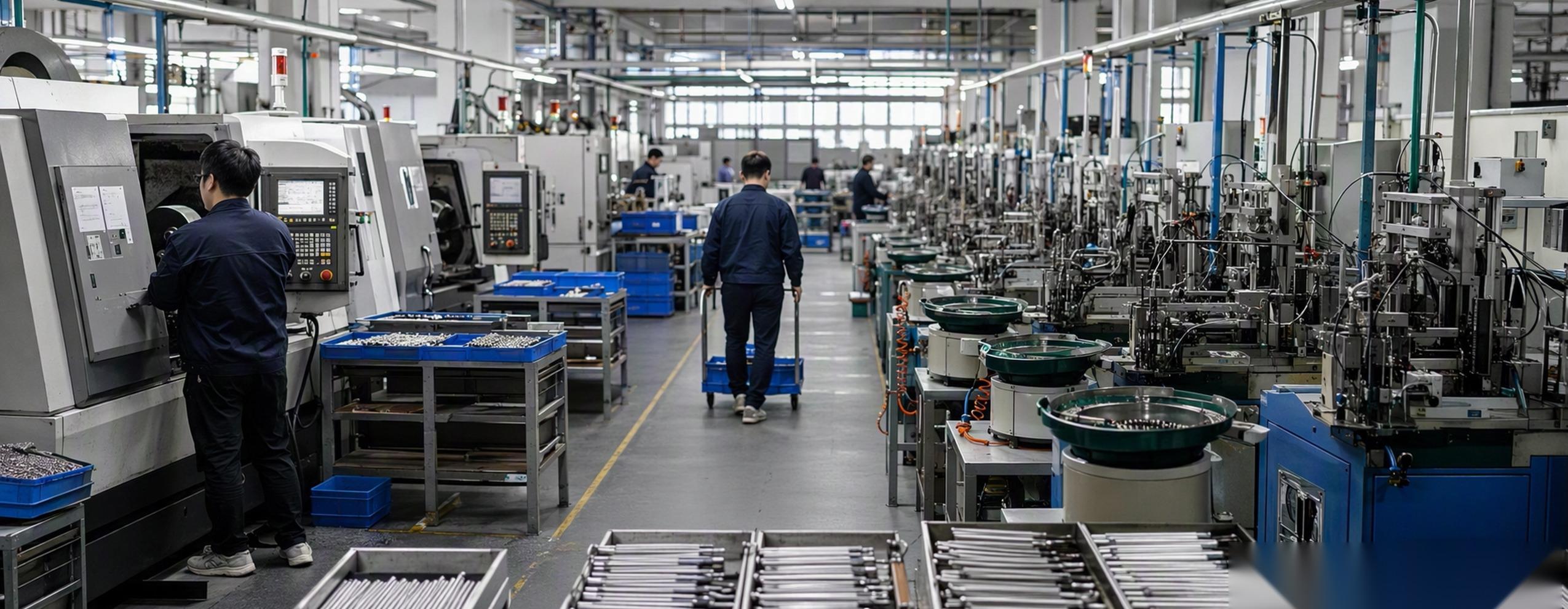
Two suppliers can send you photographs of the same pen. One machines its own barrels, owns its tooling and can produce a test report for the ink. The other forwards your enquiry to whichever workshop is cheapest this month. Their quotes may look similar; their risk profiles are not remotely the same.
The difference surfaces late — when a plating tone drifts between batches, when a deadline slips with no explanation, or when you need a document and none exists. By then the order is placed and your options are narrow.
These twelve questions take about twenty minutes to ask and will tell you which supplier you are dealing with. Ask them before you request a quote, not after.
Both are legitimate, but you should know which you are buying from, because they fail in different ways. A factory controls process and cost but may be rigid on small variations. A trading company offers breadth and flexibility but adds a layer between you and production — which matters most when something goes wrong.
Three quick tests:
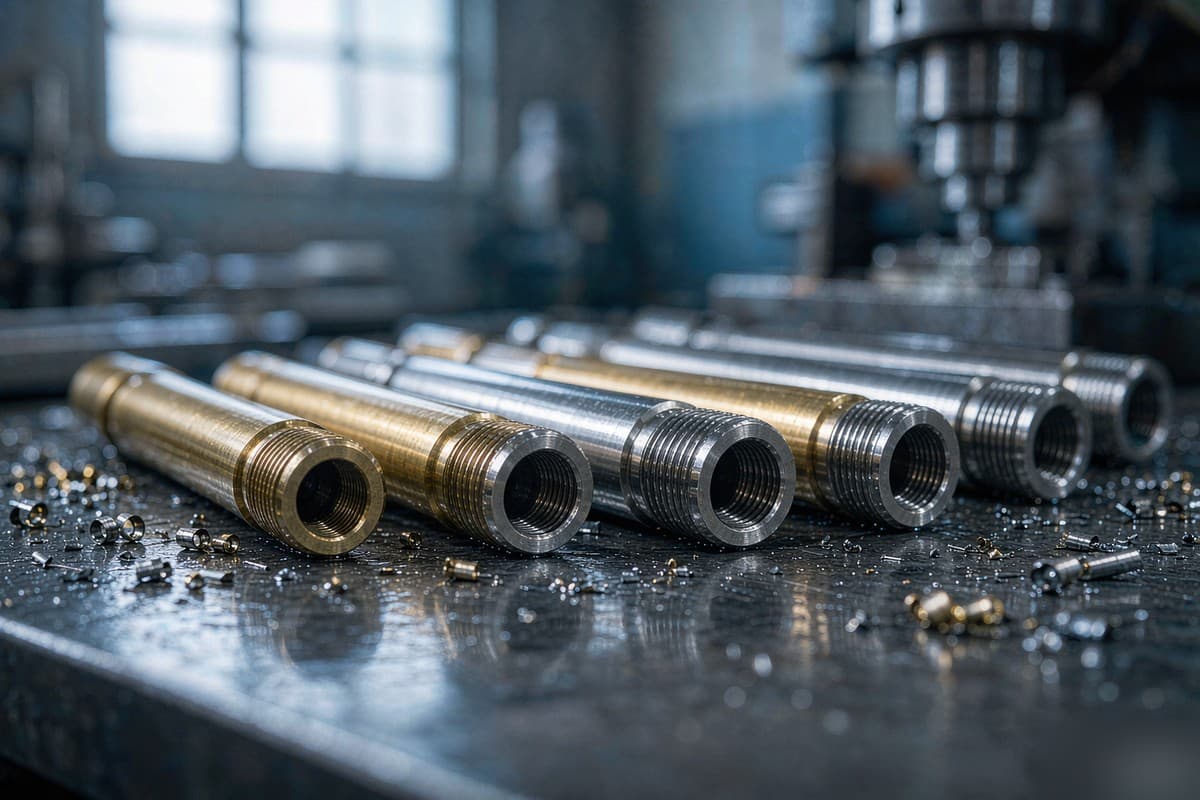
Why ask: every outsourced step is a step you cannot audit, and a variable you cannot control.
A good answer: specifics — which processes are in-house and which are not, stated plainly. “We machine, polish and plate here; refills are bought from Schmidt” is a good answer.
Why ask: if you pay for a mould and the supplier owns it, you cannot move the order later.
A good answer: tooling paid for by the buyer belongs to the buyer, stated in writing, with the mould number recorded.
Why ask: an existing mould removes tooling cost and weeks from the timeline.
A good answer: a number, plus a willingness to check your brief against existing tooling before quoting new.
Why ask: “we have QC” is not an answer. Defects surface at volume, and inspection depth is where corners get cut.
A good answer: named stages — incoming material, in-process, final — plus what is checked at each. See our own three-stage process as a reference point.
Why ask: the answer determines whether you can distribute at all. Full detail in our compliance guide.
A good answer: REACH and RoHS produced immediately, with test reports, dates and the tested article named.
Why ask: a proprietary cartridge means the pen dies when the ink runs out. See why refill standard dominates lifecycle value.
A good answer: Parker-style G2 or Schmidt EasyFlow, named, with alternatives available.
Why ask: a single unit price hides the quantity effect and prevents you from seeing where the economies are.
A good answer: tiered pricing at several volumes, with the MOQ stated for your level of customisation — see our MOQ guide.
Why ask: sampling is where most timelines actually slip.
A good answer: the three sample types distinguished — stock, custom logo, pre-production — with timing and whether setup charges are refundable.
Why ask: every supplier promises a date. The question is what they do when they miss it.
A good answer: a stated lead time plus a named contingency — and a willingness to put the delivery date in the contract with a remedy.
Why ask: terms signal confidence and affect your cash exposure.
A good answer: standard structure — deposit, balance against documents or after inspection — with the split stated clearly and no pressure to pay 100% upfront.
Why ask: willingness to be seen is the strongest single signal.
A good answer: yes, readily, including the machining floor and QC bench — not just a showroom.
Why ask: this is the question that matters when everything else has gone wrong.
A good answer: a defined process — inspection report, agreed defect threshold, remake or credit — stated before you order rather than negotiated after.
Red flags
Green flags
The most reliable single signal: a supplier who tells you something you did not want to hear — that your timeline is not achievable, that your artwork will not engrave at that size, that a cheaper option suits your use case better. Suppliers optimising for this order tell you what you want to hear. Suppliers optimising for the next ten orders tell you the truth.
Quotes are only comparable if the specifications are. Before you compare prices, get both suppliers to answer the same eight items in writing — barrel material and weight in grams, construction and part count, surface finishing steps and plating metal, branding method with colour and position count, refill specification, mechanism type, packaging format, and tooling charges with what they cover.
Our cost driver guide includes this as a printable comparison table. If two quotes differ by more than about 15%, the gap is almost always in one of those eight items rather than in margin.
However good the answers to the twelve questions are, do not make your first order the big one. A trial order converts promises into evidence, and it costs far less than a defective full run.
| What the trial verifies | What to check on delivery |
|---|---|
| Build quality at volume | Weigh several units — consistency across the batch matters more than any single pen |
| Finish consistency | Compare plating or anodising tone across units, in daylight rather than under warehouse lighting |
| Logo accuracy | Alignment, legibility and depth across the batch, not just on the sample |
| Packaging | Arrival condition — this is where protection failures show up |
| Documentation | Did the compliance file actually arrive, and does it match the order? |
| Communication under pressure | How they handled the one thing that went wrong — every order has one |
Order at the low end of the MOQ for the trial, then scale. If a supplier performs well on 1,000 units, you have earned the right to trust them with 20,000 — and you have a benchmark for every future order.
One more thing worth testing: how they respond when you raise a problem. Raise a genuine minor issue during the trial — a scratch, a misaligned logo on a few units — and see what happens. The response tells you more about the relationship than any answer to the twelve questions.
Ask for a live video walkthrough of the machining floor and ask a process question rather than a product question — for example, how many polishing steps run before plating. A factory answers specifically and shows the floor readily; a reseller answers vaguely and offers a showroom.
If you pay for a bespoke mould, you should own it, and the mould number should be recorded in writing. Otherwise you cannot move production later. Reusing an existing mould avoids the question entirely and saves both cost and lead time.
Yes, and a real factory will not object. If an in-person visit is impractical, a live video tour of machining, finishing and QC is a reasonable substitute and tells you most of what you need.
A deposit with the balance due against shipping documents or after inspection is standard. Be cautious of any supplier pressing for 100% upfront, particularly on a first order.
This should be settled before you order, not after. Agree the inspection standard, the acceptable defect threshold and the remedy — remake or credit — in writing, and request an inspection report before the balance is released.
We would rather you asked them now than discovered the answers later. Tell us what you are sourcing and we will answer all twelve in writing — which processes run in-house, what we outsource, what documents we issue, and what happens if a run goes wrong.
