Custom OEM Metal Pens Manufacturer & Global Supplier
Custom OEM Metal Pens Manufacturer & Global Supplier
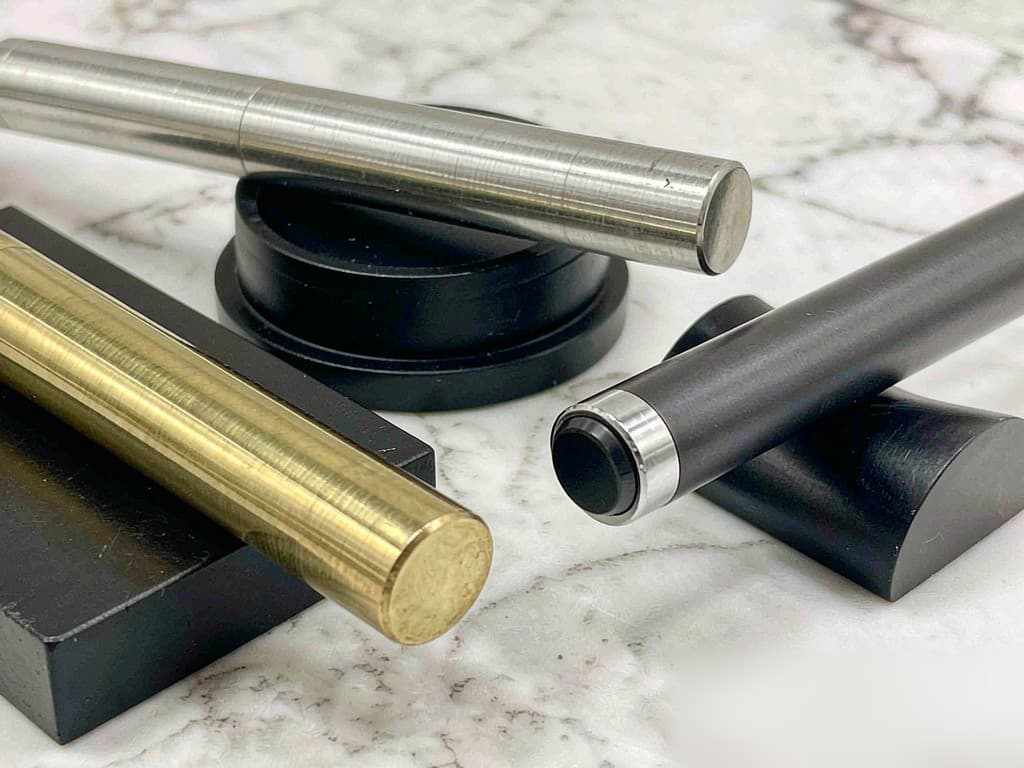
Material selection is the single biggest decision a B2B buyer makes when sourcing custom metal pens. It sets the unit price and the lead time, but it also sets the perceived value, the writing feel, and — less obviously — which logo methods are even available to you. A five-colour logo is straightforward on aluminium and close to impossible on brushed stainless steel.
This comparison covers the three mainstream barrel materials: what each one costs, how much it weighs in the hand, which finishes and logo methods it accepts, and where each one stops being the right answer.
| Factor | Aluminium | Brass | Stainless steel |
|---|---|---|---|
| Finished weight | 15–25 g | 35–55 g | 25–40 g |
| Unit cost | Lowest | Highest | Mid-range |
| Colour options | Excellent — anodising covers essentially any Pantone shade | Limited to plating tones | Limited — brushed, polished, matte, sandblasted |
| Logo methods | Laser, screen print, UV print, pad print | Laser engraving (premium result), pad print | Laser, pad print |
| Durability | Good — anodised layer resists scratching | Good — may develop patina over time | Excellent — hardest of the three |
| Corrosion resistance | Good | Moderate — plating protects the base metal | Excellent |
| Machining | Easiest — fast cycles, fine threads | Moderate — denser, slower | Hardest — slowest, highest tool wear |
| Best for | High-volume events, colourful brand identity | Executive gifts, luxury positioning | Industrial brands, field teams, daily rugged use |
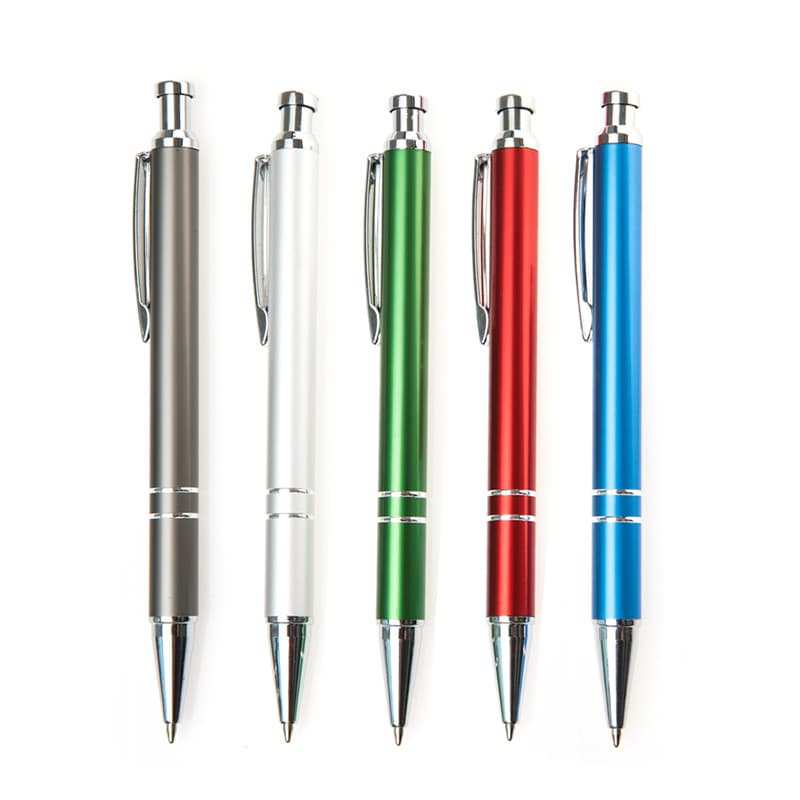
Aluminium
15–25 g · lightest
Anodises to any Pantone shade, lowest unit cost. Best for high-volume events and strict brand-colour requirements.
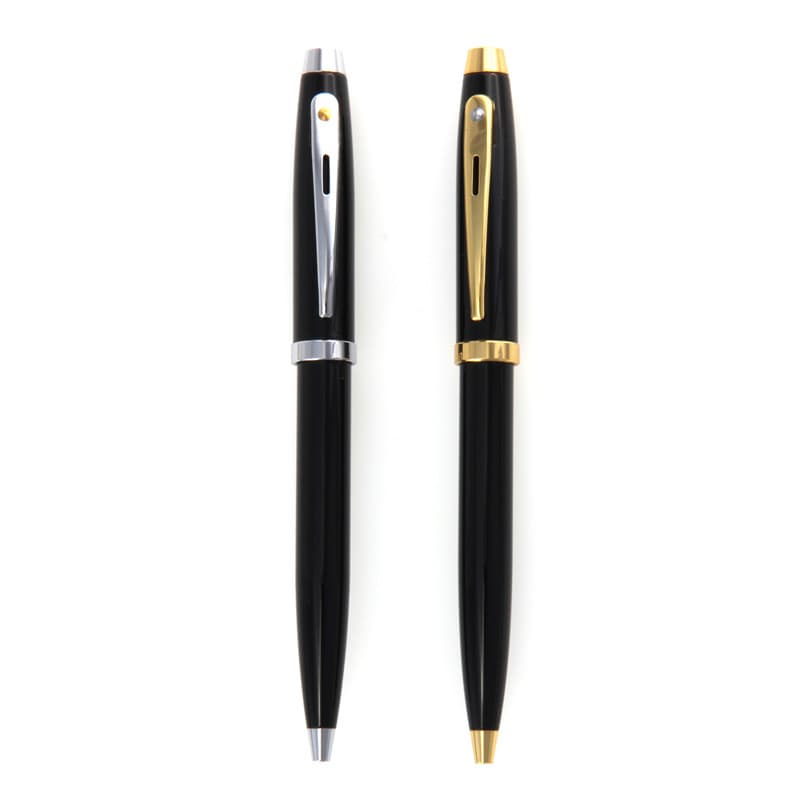
Brass
35–55 g · heaviest
Weight and warm lustre, with the highest laser engraving contrast. Suited to executive gifts, boardroom kits and client anniversaries.
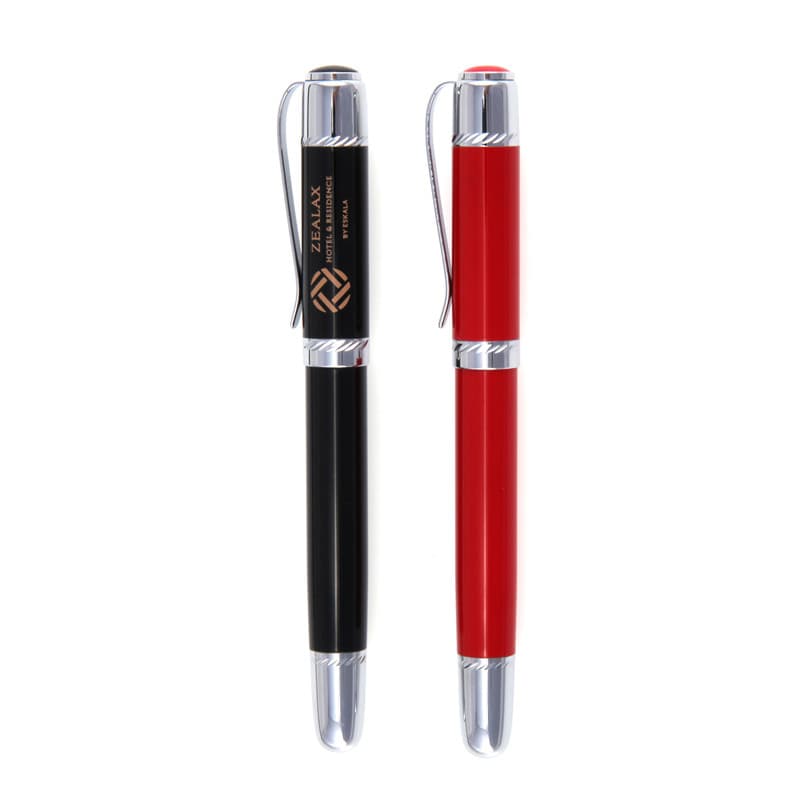
Stainless steel
25–40 g · mid-weight
Hardest and most corrosion-resistant, easy to sanitise, reads as a tool. Suited to field teams, healthcare and technical brands.
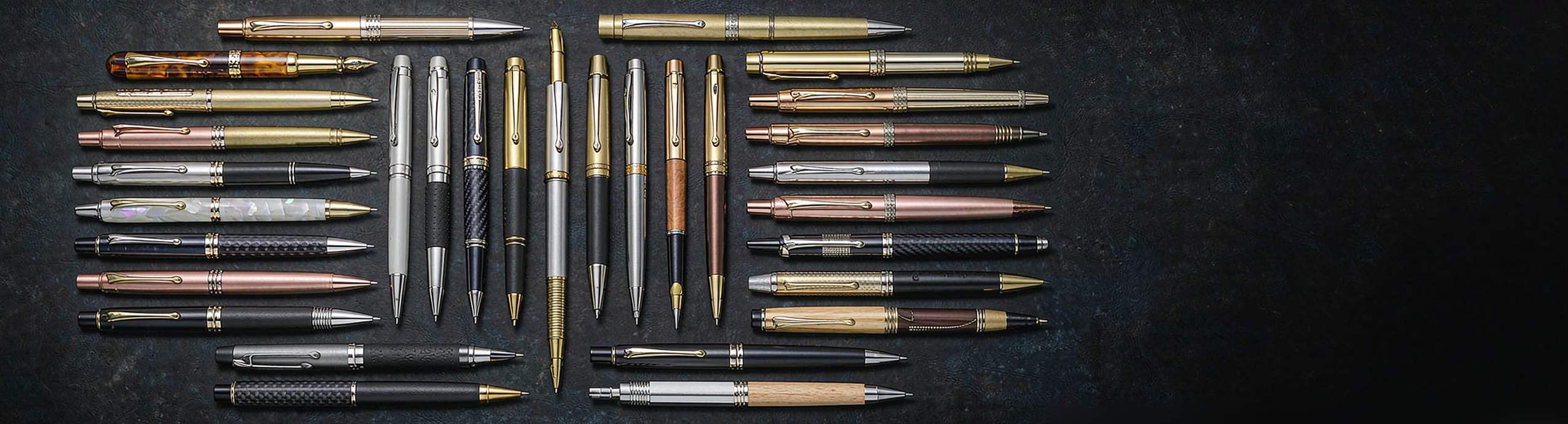
A representative model for each material — select any pen for specifications and a quote. Finished weight, length and plating can all be customised.
Aluminium is the workhorse of promotional metal pens. Its lightness makes it comfortable for all-day use, and it machines cleanly — fine threads, crisp clip fittings and tight tolerances at scale, which is why it is the fastest material to produce.
The standout advantage is anodising. This electrochemical process grows a hard, coloured oxide layer into the barrel surface rather than painting onto it. The result is a satin or matte finish in virtually any Pantone shade, from corporate navy to rose gold, and it is markedly more scratch-resistant than a painted surface. A pen that has spent weeks in a conference bag still looks presentable.
For B2B buyers, aluminium hits the sweet spot: more premium than plastic, full-colour logo capable, and manageable per-unit cost on large programmes. It is the default for trade shows, university partnerships, employee welcome kits and any campaign where brand colour accuracy matters. Browse our aluminium pen range for volume-friendly profiles.
If aluminium is the practical choice, brass is the emotional one. A solid brass pen carries real weight — the moment a recipient picks it up, the heft signals quality before they have looked at anything. Brass also has a warm, subdued lustre that photographs well and, if left unlacquered, develops a subtle patina that many buyers consider a feature rather than a flaw.
Brass is particularly well suited to laser engraving. Because engraving removes the surface plating to expose the raw metal beneath, brass produces sharp, high-contrast marks that read as refined rather than flashy. It is the material behind most high-end executive pens, typically finished in matte black, gunmetal or champagne gold.
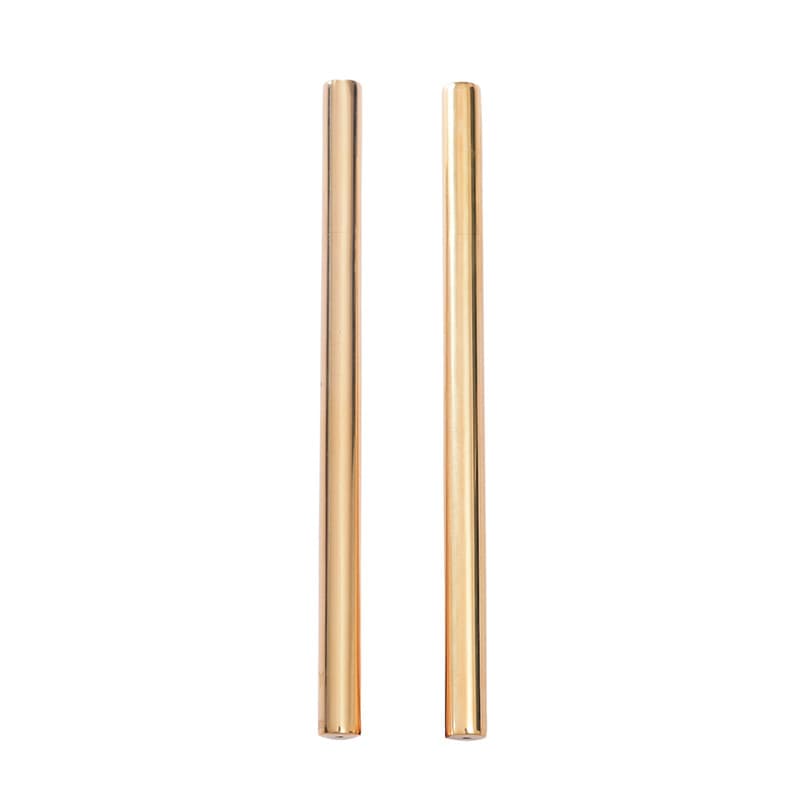
The trade-off is cost and weight. Brass is denser and more expensive to machine and plate than aluminium. It earns its place where the recipient’s seniority justifies the higher unit cost: board meetings, client anniversaries, C-suite onboarding, investor relations.
Stainless steel sits between the other two. It is harder than aluminium and more corrosion-resistant than brass, which makes it the right answer for pens that will live in industrial, medical or field-service environments — anywhere the pen gets wiped down, dropped or carried in a tool bag.
Visually it communicates precision and restraint. A brushed or sandblasted stainless barrel pairs naturally with minimalist branding and monochrome palettes, which is why technology companies, engineering firms and automotive brands gravitate to it. It reads as a tool rather than a gift, and for some brand positions that is exactly correct.
This is the table buyers wish they had seen before sending artwork. Material choice quietly decides which branding methods are available, and discovering the limit after artwork approval is an expensive way to learn it.
| Requirement | Aluminium | Brass | Stainless steel |
|---|---|---|---|
| Full-colour / multi-colour logo | Yes — UV or screen print | No — plating tones only | No — limited |
| Exact Pantone barrel match | Yes — via anodising | No | No |
| Deep high-contrast engraving | Good | Excellent | Moderate |
| Mirror / high-polish finish | Moderate | Yes | Yes |
| Complex anodised patterns | Yes | No | No |
| Intricate machined detail | Easiest | Good | Hardest / slowest |
| Custom-shaped clip casting | Yes | Yes | Moderate |
| Lightest possible weight | Best | Heaviest | Moderate |
Material is one of seven cost drivers, but it is the one that anchors the others. In broad terms, on an otherwise identical structure: aluminium is the baseline, stainless steel adds a meaningful premium for slower machining and higher tool wear, and brass adds the most — driven by material density, machining time and the plating steps required to finish it.
That spread is not purely penalty. The finishing that brass requires is also what produces the executive result, so the premium buys positioning as well as metal. The mistake is specifying brass for a 20,000-unit trade-show giveaway where the recipient will never register the difference, or specifying aluminium for a board gift where they absolutely will.
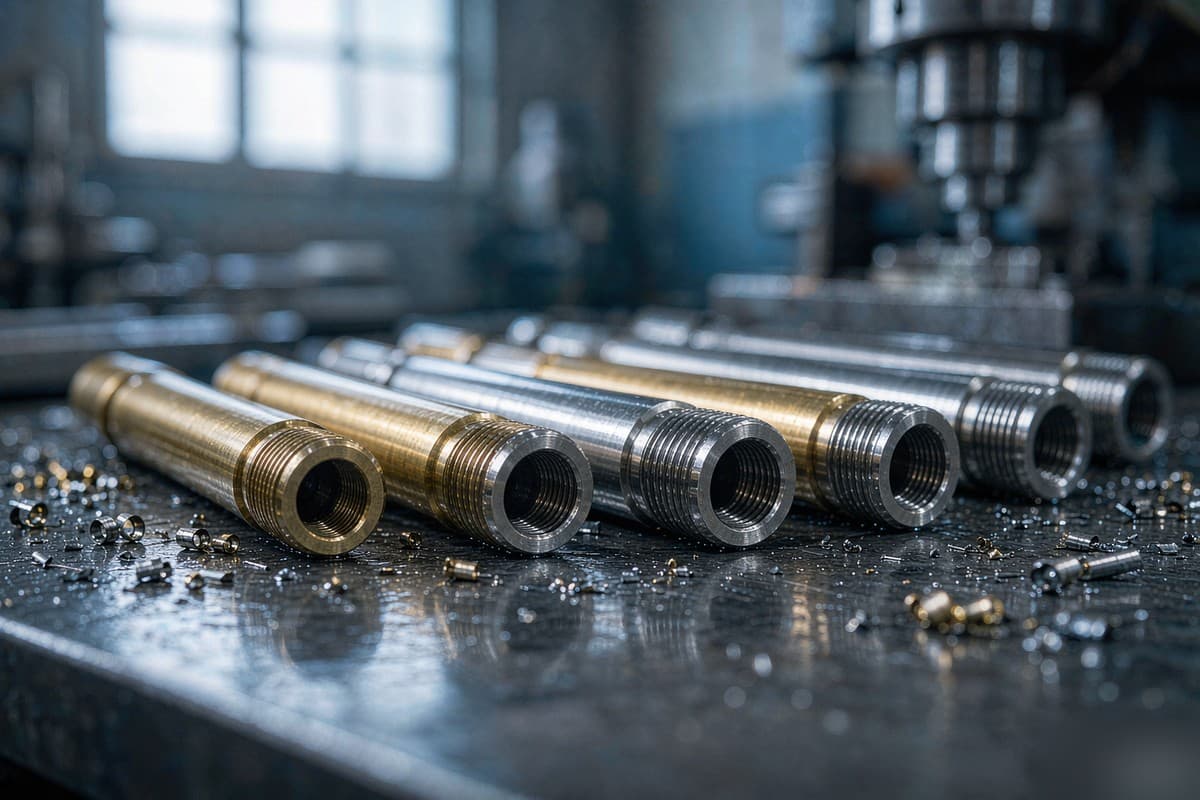
The cost driver most buyers miss: finishing steps, not raw material. A single-tone plating and a dual-tone plating on the same brass barrel are two different processes — dual-tone means a second plating cycle plus masking. For the full breakdown of all seven cost drivers, see what really drives your unit cost. You can also follow the barrels through our machining and finishing process.
Specification sheets cannot tell you how a pen feels. A thirty-minute side-by-side evaluation with physical samples will settle the material question faster than any amount of reading. Run these five checks:
Aluminium. It machines fastest, takes anodising in a single process, and does not require the plating steps that brass and stainless do. On a 10,000-unit programme the difference against brass is substantial.
Unlacquered brass develops a patina — a gradual darkening and softening of the surface. Many buyers consider this desirable. If you want brass that stays bright, specify a protective lacquer or a plated finish and confirm it at quotation stage.
Not in the way aluminium can. Stainless does not take an anodised colour layer; coloured stainless is normally achieved through PVD coating instead, which has a different cost structure and a more limited colour range.
Roughly double. Aluminium pens typically finish at 15–25 g and brass at 35–55 g for comparable profiles. That difference is the main reason brass reads as an executive gift and aluminium reads as a volume giveaway.
No — laser engraving is inherently single-tone, because it removes the surface to expose the metal beneath. For multi-colour artwork, use screen or UV printing on aluminium. Full comparison in our engraving vs printing guide.
Specification sheets only go so far. Tell us your quantity, target price band and artwork, and we will send sample pens in aluminium, brass and stainless steel so your team can compare weight, balance and engraving contrast directly.
