Custom OEM Metal Pens Manufacturer & Global Supplier
Custom OEM Metal Pens Manufacturer & Global Supplier
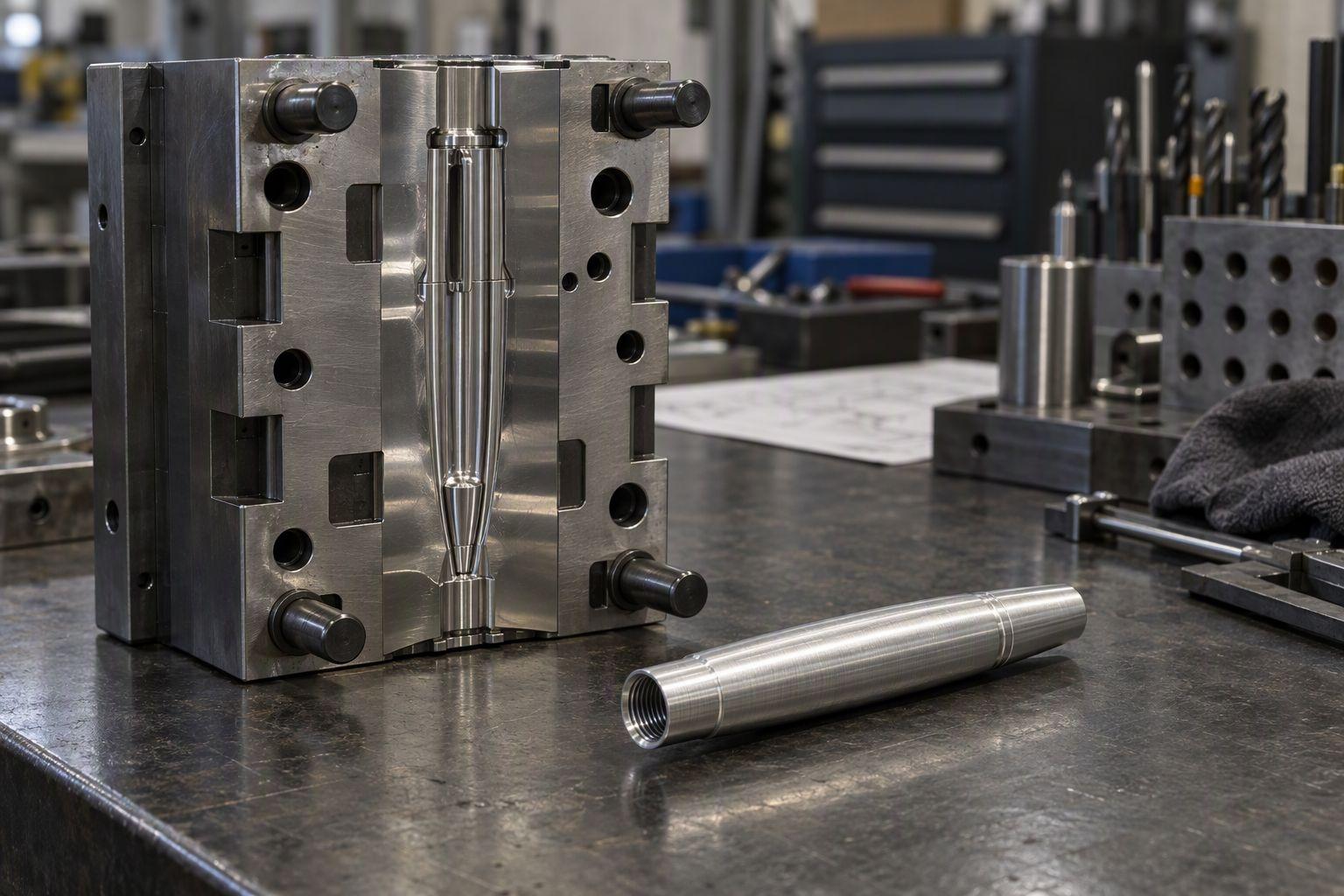
Every custom pen project starts with a fork that buyers rarely notice at the time: an existing catalogue mould, or a fully custom tool. The fork decides development cost, minimum order quantity, time to first sample, how much of the design you can change later — and, at the end of the list where it is least welcome, who owns the hardware after the order is paid and delivered.
Most buyers discover the ownership question after they have paid the tooling fee. The assumption is natural: I paid for the tool, so the tool is mine. It is also, in most of this industry, wrong — or at least not right by default. The tooling fee usually buys the existence of the tool and its use for your production, not title to the tool itself. Whether that is the right arrangement for your project depends on what you are trying to protect, and that is a decision worth making before the invoice, not after.
This article sets out our position plainly, explains the reasoning honestly rather than defensively, and covers the alternatives for buyers whose situation genuinely requires owning tooling. It also gives the clauses a tooling agreement should contain — as things to ask any supplier for, whether that supplier is us or someone else.
The two routes are not better and worse versions of the same thing; they are different products with different economics. Here is how they compare across the seven dimensions that decide most projects.
| Dimension | Existing / catalogue mould | Fully custom tooling |
|---|---|---|
| Development cost | None, or minimal — the tool already exists and its cost is already in the product line | A one-off tooling fee, covering each separate mould the design needs (cap, barrel, clip, tip as applicable) |
| Lead time to first sample | Short — the production tool is proven, so samples are a matter of running it; typically days rather than weeks | Longer — the tool has to be built, tried and corrected before a sample means anything; expect the tooling phase to add weeks before sampling starts |
| Minimum order quantity | Usually lower — with no tooling cost to amortise, small orders remain economic | Higher — the tooling fee has to be earned back over the order, so both sides need volume for the arrangement to make sense |
| What you can change | Barrel colour, finish, decoration and refill; the geometry itself stays as it is | The geometry itself — barrel profile, clip form, tip design, engraved detail — as well as everything else |
| Who owns the tooling | The factory already holds it; your order changes nothing about ownership | Our position: the fee is non-refundable and the tooling remains the factory’s property, even after the order is paid and delivered |
| Confidentiality of the design | The catalogue shape is available to other buyers; what distinguishes your pen is your finish and decoration, not its form | A fully custom geometry is not put into the catalogue for other buyers — but if exclusivity matters contractually, ask for it in writing rather than assuming it |
| Consistency on reorder | Geometry is fixed and proven across many production runs, which makes reorders straightforward | We retain your tooling for reorders, so the original geometry reproduces; finishes are matched against the retained approved samples |
Read across those rows and a pattern emerges: existing moulds buy you speed, lower MOQ and no ownership question, at the price of a shape you share. Fully custom tooling buys you a form nobody else has, at the price of development cost, higher MOQ and — with most suppliers, including us — a tool that stays where it was built.
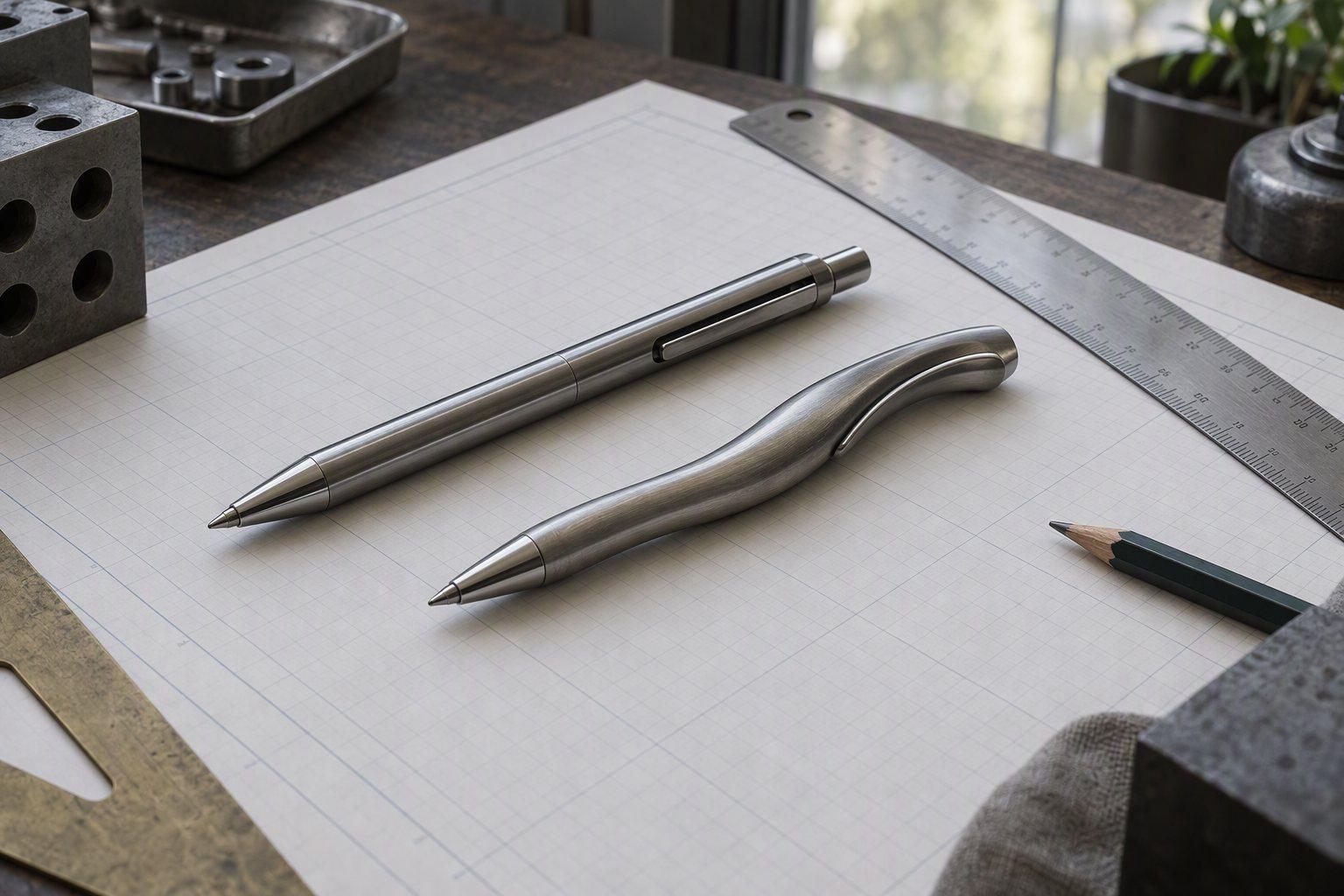
Ownership is abstract until one of three specific situations arrives. Each of them is common, and each has an honest answer and a workaround.
A buyer builds a successful programme on a custom tool, volumes grow, and a second supplier offers a lower unit price. The buyer asks for the tooling to be transferred — and learns it cannot be, because the tooling is the factory’s property. This is the scenario that produces the most anger, so it is worth being precise about why the position exists. The factory carries the cost of building the tool, maintains it, stores it, and needs it available for reorders. A tool that left the factory could not be serviced in the facility that understands it; and a third party running someone else’s tool has no obligation to the tolerances that tool was built and proven to. A transferred tool does not guarantee the second factory’s output matches the first’s — it guarantees only that the second factory now has the same starting hardware and none of the process knowledge.
The honest workaround: if supply continuity across multiple factories is a real requirement for your programme, it is a requirement to be decided before tooling is paid for. The realistic routes are an existing-mould product, where no single factory’s hardware stands between you and a second source, or a dedicated tooling-ownership arrangement where a supplier offers one. Our article on how to vet a metal pen manufacturer covers how to raise this kind of question during supplier selection rather than after it.
A buyer pays a tooling fee in good faith, treats it as a purchase, and only discovers at reorder or at the end of the relationship that no title transferred. The fee covered making the tool and holding it for production — a real cost the factory incurred and cannot recover if the tool is never used — but not ownership. This is not a trick, and it is not unusual, but it is exactly the kind of thing that should be explicit on the quotation and in the contract rather than implied by the word “tooling charge”.
The workaround is procedural: ask the ownership question in writing before paying anything, and get the answer in the contract, not the email thread. Any supplier should be able to state their position plainly — ours is stated in the box below — and if a supplier is evasive about who holds title to a tool you are funding, that evasiveness is itself information about the relationship ahead.
A buyer reorders after a year and wants the clip profile softened, or an engraving detail moved. They expect a small engineering cost; they receive a new tooling quotation, because the change is inside the mould and the mould cannot be edited — it can only be rebuilt or supplemented. Changes to finish, colour or surface decoration are not tooling changes and are handled as ordinary specification updates. Changes to the moulded geometry are tooling changes, full stop.
The workaround is design discipline at the start: decide which elements of the pen are likely to evolve, and keep those elements out of the tool. Detail that might change is often better applied by laser engraving or printing than cut into the mould; a clip you might revisit is a component to source separately rather than machine into the barrel tool. Batching the changes you do want — doing two reorders’ worth of evolution in one tooling revision — is the other half of the discipline.
A tooling agreement does not need to be long, but it does need to exist. These are the clauses to ask for — framed as questions for any supplier, not as an offer of ours:
These clauses are the difference between a tooling arrangement and a tooling surprise. A supplier who provides them without being pushed twice is a supplier who has thought about the relationship beyond the first order.
Some pens need to be proprietary — a mechanism or form that is part of what the buyer sells. For those projects, three realistic strategies exist, and they are worth understanding before tooling is committed rather than after.
Keep the differentiating element in a part you control. The most durable protection in a pen is often not the barrel at all: it is the refill, the clip, or a component you supply yourself. A distinctive refill — in write feel, ink or brand — travels with the buyer, not the factory, and no mould anywhere can take it away. Our overview of ballpoint, rollerball and gel refills is a reasonable starting point for thinking about which component of the writing experience deserves to be the locked one.
Use a catalogue barrel with custom decoration. A standard, proven barrel — in the right metal, with the right mechanism — decorated so distinctively that the barrel underneath never matters. This sacrifices geometric uniqueness and buys speed, low MOQ and total freedom to move suppliers later. For most promotional and corporate programmes, the decoration is the product anyway.
Negotiate a dedicated tooling arrangement. Some suppliers will sell tooling ownership, charge a higher tooling fee for it, or amortise tooling into a volume commitment. We do not offer it as a standard term, but it exists in the industry, and a buyer whose requirement is genuine ownership should ask for it explicitly — the answer, including a no, is useful information delivered early.
The honest caveat applies to all three: a fully custom mechanism that only one factory can make creates lock-in, whatever the contract says, because the process knowledge lives with the factory as much as the hardware does. That lock-in is not automatically wrong — many successful proprietary products are built on a single-source mechanism — but it should be a decision made deliberately, with eyes open, rather than discovered at the moment a buyer first tries to move.
Our position, stated plainly so you know our terms before enquiring: our tooling fee is non-refundable, and the tooling remains the factory’s property even after your order is paid and delivered. The factory carries the cost of building the tool, maintains and stores it, and needs it available for reorders and service; a tool that left the factory could not be serviced, and a third party running it would have no obligation to the tolerances it was built to. What you get in return is retained tooling: reorders reproduce the original geometry, and finishes are matched against the samples you approved. If your programme requires owning the hardware, the catalogue-mould route or a dedicated tooling-ownership arrangement with a supplier who offers one is the realistic path — and it is better decided now than discovered later.
Not with us, and not by default in most of this industry. The fee covers building the tool and holding it for your production; it does not transfer title. Our position is that tooling remains the factory’s property, and the reasoning is set out in the box above. If ownership is a requirement for your project, ask the question in writing before paying — the answer varies by supplier and it should never be assumed.
Under our terms, no — the tooling is the factory’s property. Even where transfer is possible in this industry, it often disappoints: a third party running a tool built and proven elsewhere has no obligation to the original tolerances, and the process knowledge stays with the factory that developed it. If multi-sourcing is a real requirement, an existing-mould product or a dedicated tooling-ownership arrangement is the more reliable path, and both are best arranged before tooling is paid for.
We retain tooling for reorders, and the retention period should be agreed in writing at the time of the order — ask for it in the tooling terms, along with the notice you would receive before tooling is retired. Tooling has a service life; a reorder years later should reproduce the original geometry rather than discover the tool has been rebuilt or scrapped. If your reorder cycle is long, the retention clause matters more than the tooling fee.
Then no tooling is involved and no new fee applies. Colour and finish changes are ordinary specification updates — that is precisely why we recommend keeping likely changes out of the moulded geometry and applying them at the finish or decoration stage. The rule of thumb: if the change is on the surface, it is a specification update; if the change is in the shape, it is tooling.
Some suppliers will credit or amortise the tooling fee across a first production order, which changes when you pay it rather than what you pay. The fee itself reflects the cost of building the specific tool, so a more complex design means a higher fee at any volume. What higher volume does is spread the fee over more units, which is why custom tooling tends to come with a higher MOQ — and why the total-cost picture is in how custom pen pricing is actually built.
Whether you need a catalogue shape with your decoration or a fully custom pen, we will tell you plainly what the development cost, MOQ and timeline look like — including the tooling terms, stated up front rather than in the contract. If ownership of the hardware is a requirement, we will say so honestly and point you to the route that fits. Within one business day.
